Showing posts with label Kuala Lumpur (City). Show all posts

Why Malaysians Clean Their Utensils Before Eating and the Unique No-Knife Culture

Malaysia is famous for its delicious food, vibrant street markets, and multicultural dining experience. But beyond the flavors and aromas, visitors often notice something curious — before eating, Malaysians rinse with hot water or wipe with napkins or tissue papers their spoons, forks, or chopsticks, and you’ll never see a knife on the table. This is not a random habit but part of a long-standing cultural pattern that reflects hygiene awareness, local dining traditions, and the practicality of Malaysian cuisine.

Everyday Dining Setup in Malaysia

In almost every restaurant, food court, or hawker center across Malaysia, you will find a simple dining setup: a spoon and a fork, sometimes a pair of chopsticks. The spoon is the main utensil, used for both rice and noodles, while the fork helps push food onto the spoon. Knives are notably absent. Most travelers are surprised by this, but for Malaysians, it is completely normal. The country’s diverse cuisine — from spicy curries to fried noodles and rice-based dishes — is designed to be eaten easily without cutting at the table.

How Malaysians Clean Their Utensils Before Eating

While restaurants are expected to clean their cutlery properly, many Malaysians still prefer to clean them again themselves before eating. This practice gives peace of mind and ensures hygiene, especially in busy street stalls or open-air eateries where utensils might be exposed to dust. The cleaning method depends on the type of restaurant and cultural background of the diners.

1. Rinsing with Hot Water or Hot Tea

This is perhaps the most common and visible method in Chinese-style eateries, especially at kopitiams (local coffee shops), dim sum restaurants, and hawker stalls. Many locals pour hot water or tea over their spoon, fork, and chopsticks before eating. Some establishments even provide a small bowl or glass with hot water specifically for this purpose. Some establishments provide a bowl or a glass with hot water with spoons and forks dipped in hot water, and in some only a bowl or a glass with hot water is provided and locals can take out spoons, forks and chopsticks from a box located on table and dip them in hot water for few minutes before using them with foods. The act is believed to sterilize the utensils and remove any detergent residue or dust. It’s a simple, quick ritual that shows both care and habit.

In some places, the waiter will serve a pot of hot tea along with small cups, and diners use this tea to rinse their utensils before drinking the tea itself. It’s a blend of practicality and tradition that has persisted for generations.

2. Wiping with Tissue or Napkin

In Indian Muslim restaurants (known as mamak stalls) and Malay eateries (warungs), diners usually wipe their spoons and forks with tissue paper before eating. Hot water may not always be available, so wiping becomes the most convenient method. It’s a quick way to ensure the utensils feel clean and dry. Many locals even bring their own tissue packs, a small but important part of Malaysian dining culture.

3. Using Clean Utensils from a Communal Jar

In casual street food settings, you might see utensils stored in a jar or container on the table. These are typically washed by the restaurant, but diners often give them an extra rinse or wipe just to be sure. It’s not a sign of distrust — more a habit rooted in caution and self-care.

4. Washing Hands Before Eating

In Malaysia, it’s common to see hand-washing areas near the dining space. This is not only for cleanliness but also because many people eat certain foods with their hands. Dishes like banana leaf rice, nasi lemak, and nasi kandar are traditionally eaten using the right hand. Washing hands before and after the meal is both a hygienic and cultural expectation, particularly among Malays and Indians.

Origins of “No-Knife” Culture

The absence of knives in Malaysian dining isn’t a matter of oversight — it’s an intentional and practical choice shaped by the local food culture. Malaysian dishes are designed to be eaten easily without cutting at the table. Meats are usually sliced into smaller pieces during preparation, and vegetables are chopped or shredded before cooking. Here are some of the key reasons behind this unique custom:

  • Historical influence: Traditional Asian meals, especially in Chinese and Malay households, rarely included knives on the dining table. Cutting was considered a kitchen task, not something to be done while eating.
  • Safety and convenience: In busy hawker centers and crowded eateries, using knives could be risky and impractical. The spoon-and-fork method is faster, safer, and cleaner.
  • Communal dining style: Many Malaysian meals are served family-style, where several people share dishes. Having knives on the table is unnecessary because food is served in portions that can be easily scooped or lifted.
  • Adaptation to cuisine: From rice dishes like nasi goreng (fried rice) to noodle soups like laksa, Malaysian food is best enjoyed with a spoon and fork or chopsticks.

How the Habit Differs Among Malaysia’s Communities

Malaysia’s food culture reflects its multicultural identity — Malay, Chinese, and Indian influences each bring their own dining traditions, but the overall approach to utensils is similar. Here’s how each community contributes to this shared dining etiquette:

Malay Dining Habits

Malay meals often involve rice and various side dishes served together. It’s common to eat with the right hand, especially in traditional or family settings. In restaurants, spoons and forks are provided, but knives are rare. Cleanliness is emphasized — many Malay households encourage rinsing utensils or plates before use, even at home. It’s a small ritual of reassurance and respect for food.

Chinese Dining Habits

Chinese Malaysians typically use chopsticks and a spoon. Before eating, it’s very common to see people rinsing their utensils with hot water or tea. This habit likely originates from traditional Chinese dining practices in southern China, where ensuring cleanliness in busy teahouses was important. Even in modern air-conditioned restaurants, you’ll still see this practice continue, sometimes with dedicated bowls for rinsing utensils at the table.

Indian and Mamak Dining Habits

Indian Malaysians, especially those dining at mamak stalls, often use their hands for foods like roti canai, briyani, and curry dishes. When utensils are used, it’s usually a spoon and fork, which are wiped clean before eating. Washing hands before and after the meal is a central part of the experience, and diners rarely touch food with the left hand, which is considered impolite.

Hygiene, Symbolism, and Peace of Mind

At first glance, the habit of cleaning utensils might seem unnecessary in modern, well-maintained restaurants. However, for Malaysians, it’s about more than just hygiene — it’s psychological comfort. In a tropical climate where humidity can affect cleanliness, taking a few seconds to rinse or wipe utensils is an easy way to feel safe and respectful toward one’s food.

This habit also reflects a deeper cultural value: mindfulness before eating. Taking a brief moment to ensure your utensils are clean is like a quiet ritual of appreciation — acknowledging that a meal is about to begin. It’s a practice that blends tradition, practicality, and personal care.

What Travelers Should Know

If you’re visiting Malaysia for the first time, don’t be surprised to see people cleaning their utensils or skipping knives altogether. You can follow local customs easily:

  • If you receive hot water or tea, use it to rinse your spoon and fork before eating.
  • Carry a small pack of tissues; it’s handy for wiping utensils or your hands.
  • Wash your hands before eating, especially if you’re trying local dishes served on banana leaves.
  • Don’t ask for a knife unless absolutely necessary — it’s rarely needed.

Respecting these small but meaningful customs helps you blend in with locals and shows cultural appreciation. Malaysians are friendly and won’t mind explaining how things work — but understanding these little details in advance makes dining smoother and more enjoyable.

Conclusion

A Small Habit That Tells a Big Story

Cleaning utensils before eating in Malaysia might seem like a small detail, but it carries a lot of meaning. It represents awareness, respect for hygiene, and the continuation of traditional dining customs in a modern society. The “no-knife” culture is not about lacking tools — it’s about the evolution of a cuisine designed for comfort, sharing, and simplicity. Whether you are at a street stall in Penang or a café in Kuala Lumpur, this little ritual connects you to centuries of local wisdom about food, safety, and community.

So, the next time you’re in Malaysia, and you see someone rinsing their spoon with tea or wiping their fork with tissue, remember — it’s not just about cleanliness. It’s a reflection of a culture that values thoughtfulness, togetherness, and respect for food.

Article by LatestFoto.com — Exploring world cultures one everyday habit at a time.

Types of Nasi Lemak

This is a section of a Malaysian menu featuring different types of Nasi Lemak, a popular traditional Malaysian dish.

Here’s what the menu says:

NASI LEMAK

1. Nasi Lemak Kosong – RM 3.00

> "Kosong" means "plain" in Malay. This is the basic version of nasi lemak, usually consisting of fragrant coconut milk rice served with sambal (spicy chili paste), cucumber slices, roasted peanuts, and fried anchovies.

2. Nasi Lemak Telur Mata – RM 3.70

> This version includes a fried egg ("telur mata" literally means "eye egg" in Malay, referring to a sunny-side-up egg) added to the basic nasi lemak.

3. Nasi Lemak Ayam – RM 9.30

> This is nasi lemak served with chicken ("ayam"), often fried or curried, making it a more filling meal.

About Nasi Lemak

Nasi lemak is considered Malaysia’s national dish and is also popular in Singapore, Indonesia, and Brunei. The rice is cooked with coconut milk and pandan leaves, giving it a rich aroma. It’s traditionally eaten for breakfast, but many Malaysians enjoy it any time of day.

Common accompaniments include:

Sambal (spicy chili paste)

Anchovies (ikan bilis)

Peanuts

Cucumber slices

Boiled or fried egg

Optional sides like fried chicken, rendang (spicy meat stew), or squid sambal

What each version might taste like or what drink pairs best with it?

Perfect 😋 — let’s find what each version of Nasi Lemak tastes like and what drinks go beautifully with them:

🥥 1. Nasi Lemak Kosong (RM 3.00)

Taste:
This is the simplest version — just the fragrant coconut rice, sambal, peanuts, anchovies, and cucumber. The rice is creamy and aromatic from the coconut milk and pandan leaves. The sambal gives a sweet-spicy kick that wakes you up, and the crunchy peanuts and anchovies add a nice contrast in texture.

Best drink pairing:

🧋 Teh Tarik (Malaysian pulled milk tea) — its creamy sweetness balances the sambal’s spice.

🧊 Or a cold Milo ais (iced chocolate malt drink) if you prefer something cooler and chocolatey.

🍳 2. Nasi Lemak Telur Mata (RM 3.70)

Taste:
This version adds a sunny-side-up egg (telur mata kerbau). When you break the yolk, it mixes with the rice and sambal to create a creamy, rich flavor. The combination of runny egg yolk and spicy sambal is comforting and addictive.

Best drink pairing:

☕ Kopi O ais (iced black coffee) — its bitterness cuts through the richness of the egg and coconut rice.

🫖 Teh ais limau (iced lime tea) — refreshing and balances the heaviness of the dish.

🍗 3. Nasi Lemak Ayam (RM 9.30)

Taste:
This is the deluxe version — nasi lemak served with fried or curried chicken. The fried chicken is usually marinated with turmeric and spices, giving it a golden crisp skin and juicy meat. When combined with sambal and coconut rice, it’s an explosion of sweet, spicy, savory, and aromatic flavors.

Best drink pairing:

🧃 Sirap bandung (rose syrup milk drink) — sweet, floral, and soothing against the sambal heat.

🍹 Iced lemon tea — a classic, refreshing option to cut through the richness.

✨ Fun fact:

In Malaysia, people often eat nasi lemak for breakfast, but it’s also popular for lunch, dinner, or even midnight snacks (especially from roadside stalls called warungs or mamak stalls).

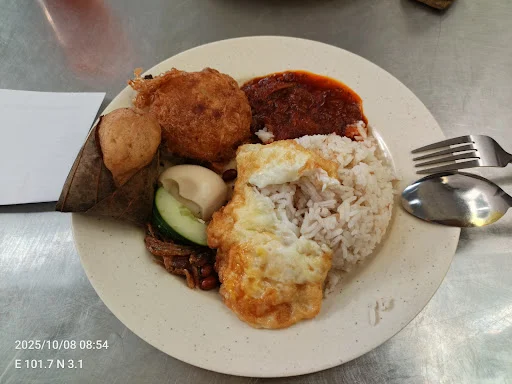
Nasi Lemak Breakfast in Bangi Street Mall Kuala Lumpur

Church in Kuala Lumpur

Ice Lemon Tea in Kuala Lumpur

Nasi Goreng Ayam

Nasi Goreng Ayam

The Authentic Indonesian Fried Rice with Chicken

Nasi Goreng Ayam is more than just a plate of fried rice. It’s a symbol of Indonesian comfort food, a culinary treasure that blends sweet, salty, and spicy flavors into one irresistible dish. Across Indonesia, from the busy streets of Jakarta to the peaceful villages of Java, Nasi Goreng Ayam is cooked and loved by millions every single day.

🌏 The Story Behind Nasi Goreng Ayam

The name says it all — nasi means rice, goreng means fried, and ayam means chicken. But behind this simple translation lies a history that stretches back centuries. Nasi Goreng Ayam is believed to have evolved from Chinese fried rice (chǎofàn), brought to Indonesia by Chinese immigrants who introduced the art of stir-frying leftover rice. Over time, Indonesians infused it with local flavors — sweet soy sauce, spicy sambal, and fragrant shallots — creating a new national identity through food.

In Indonesia, Nasi Goreng Ayam isn’t just a meal; it’s a daily ritual. It’s breakfast, lunch, and even midnight supper. You’ll find it in street stalls known as warung nasi goreng, sizzling in smoky woks as vendors skillfully toss the rice over high flames, filling the air with that unforgettable aroma.

🍗 Ingredients You’ll Need

One of the reasons Nasi Goreng Ayam is so beloved is its simplicity. You don’t need expensive ingredients — just everyday items found in any kitchen. Here’s what you’ll need to make the most authentic version:

Core Ingredients:

  • 2 cups cooked rice (preferably a day old, so it’s dry and perfect for frying)
  • 200g cooked chicken, shredded or diced
  • 2 eggs (one for frying, one for mixing)
  • 2 cloves garlic, minced
  • 2 shallots, finely sliced
  • 1–2 fresh red chilies, chopped (adjust to taste)
  • 2 tbsp kecap manis (sweet soy sauce)
  • 1 tbsp soy sauce
  • 2 tbsp cooking oil
  • Salt and black pepper to taste

Optional Add-ons:

  • 1 tsp shrimp paste (terasi) for umami flavor
  • Sambal (Indonesian chili paste) for extra heat
  • Green onions, chopped, for garnish
  • Fried shallots (bawang goreng) for crunch
  • Cucumber and tomato slices for freshness
  • Prawn crackers (krupuk) for texture

🍳 Step-by-Step

How to Make Nasi Goreng Ayam

This traditional Nasi Goreng Ayam recipe is simple, quick, and full of authentic Indonesian flavor. Follow these easy steps:

1. Prepare the ingredients

Use leftover rice if possible. It fries better and doesn’t stick. Shred your cooked chicken, mince the garlic, and slice the shallots thinly. Beat one egg for scrambling, and keep another aside for frying later.

2. Fry the aromatics

Heat 2 tablespoons of oil in a wok or large frying pan over medium-high heat. Add minced garlic, shallots, and chopped chilies. Stir-fry for 30–40 seconds until fragrant and golden. The aroma should fill your kitchen.

3. Add the chicken

Add the shredded chicken to the wok and stir well. Let it cook until lightly browned and coated with the aromatics. If using shrimp paste, add a small pinch now for extra depth of flavor.

4. Scramble the egg

Push the chicken mixture to one side of the wok. Pour in the beaten egg and scramble it quickly. Once it’s half-cooked, mix it together with the chicken and spices.

5. Add the rice

Now comes the magic! Add your cold rice and break up any clumps. Stir-fry vigorously so the rice absorbs all the flavors. Every grain should be coated with oil and seasoning.

6. Season and color

Pour in kecap manis and soy sauce. These give Nasi Goreng its signature dark brown color and sweet-savory flavor. Stir-fry for another 3–5 minutes until everything is well combined.

7. Adjust and serve

Taste and adjust with salt or pepper if needed. For extra spice, add sambal. Serve your Nasi Goreng Ayam hot, topped with a fried egg, fresh cucumber and tomato slices, prawn crackers, and a sprinkle of fried shallots. A wedge of lime on the side gives a refreshing finish.

🍴 Indonesian Ways to Enjoy Nasi Goreng Ayam

In Indonesia, Nasi Goreng Ayam is eaten at any time of the day. It’s especially popular as a late-night snack sold by street vendors. Each vendor has a slightly different recipe, and locals often have their favorite warung that they swear makes the best version in town.

It’s also a family favorite — something easy to whip up when guests arrive unexpectedly or when you need to turn leftovers into something amazing. The sweet aroma of kecap manis sizzling in the wok is often the smell of home for many Indonesians.

🌶️ The Perfect Flavor Balance

Every bite of Nasi Goreng Ayam tells a story. The sweetness of the soy sauce, the saltiness from the chicken, the kick from the chilies, and the smoky “wok hei” flavor blend together into something uniquely satisfying. It’s comfort food with character — and once you taste it, you’ll understand why it’s Indonesia’s national dish.

🥢 Nutritional Value (Per Serving)

ComponentApprox. Value
Calories580 kcal
Protein28 g
Carbohydrates75 g
Fat22 g
Fiber3 g

It’s a complete, balanced meal — full of energy, flavor, and nutrition. For a lighter version, use brown rice or add more vegetables such as carrots, peas, or bean sprouts.

🌼 Cultural Significance of Nasi Goreng Ayam

In Indonesia, sharing food means sharing happiness. Nasi Goreng Ayam represents togetherness, warmth, and simplicity. It’s a dish that unites people — whether you’re a student grabbing a quick street meal or a family enjoying dinner at home.

It’s also a global ambassador for Indonesian cuisine. In 2011, CNN International ranked Nasi Goreng among the world’s 50 most delicious foods. Since then, it has become a must-try dish for travelers exploring the Indonesian archipelago.

🍽️ Popular Variations You Can Try

  • Nasi Goreng Kampung: A “village-style” version with anchovies or shrimp paste, offering a stronger flavor.
  • Nasi Goreng Jawa: Javanese-style, with extra chilies and garlic for a fiery taste.
  • Nasi Goreng Ayam Kecap: Sweeter version with more kecap manis.
  • Nasi Goreng Ayam Pedas: Spicy variation for chili lovers.
  • Nasi Goreng Ayam Pete: Includes petai (stinky beans), a favorite among Indonesians for its strong aroma.

💬 Fun Fact

Many Indonesian families have their own secret Nasi Goreng Ayam recipe — some add shrimp paste, others use leftover satay chicken or even beef. But one thing is certain: every household believes theirs is the best!

Even Indonesian presidents have called it their favorite comfort food. When visiting other countries, Nasi Goreng Ayam often appears on diplomatic dinner menus as a proud representation of Indonesian culture.

✨ Tips for the Best Nasi Goreng Ayam

  • Always use cold, day-old rice — freshly cooked rice will turn mushy.
  • Use high heat and a wok if possible to get that smoky flavor.
  • Don’t skip kecap manis — it’s the soul of the dish.
  • Add a fried egg on top for the classic Indonesian presentation.
  • Garnish with fried shallots and a slice of lime for freshness.

🍛 A Dish That Feels Like Home

Whether you’re eating it at a roadside stall in Bali or cooking it in your own kitchen, Nasi Goreng Ayam never fails to comfort and satisfy. It’s humble yet rich in flavor, simple yet deeply rooted in culture. This fried rice with chicken has conquered hearts far beyond Indonesia — loved by travelers, chefs, and home cooks all around the world.

So the next time you have leftover rice and some chicken, don’t let them go to waste. Turn them into something extraordinary. Turn them into Nasi Goreng Ayam.

❤️ Final Thoughts

Indonesian cuisine is full of life, color, and flavor — and Nasi Goreng Ayam captures all of it in one plate. It’s an easy recipe anyone can try at home, offering a taste of Indonesia’s warmth and simplicity. Serve it hot, enjoy it fresh, and let its aroma remind you of the vibrant streets of Indonesia.

Keywords: Nasi Goreng Ayam, Nasi Goreng Ayam recipe, Indonesian fried rice, how to make Nasi Goreng Ayam, traditional Indonesian food, best fried rice with chicken, Indonesian cuisine, street food Indonesia.


💬 Want More?

If you love discovering authentic dishes and cultural recipes from around the world, stay tuned to our blog for more! Try this recipe at home and share your version of Nasi Goreng Ayam in the comments — we’d love to hear from you.

👉 For sponsored posts or ad placement, contact us via our website. Your brand could appear right here next to delicious global recipes!

KL Forest Eco Park

A very famous eco-park in Kuala Lumpur is KL Forest Eco Park (also known as Taman Eko-Rimba Kuala Lumpur or Bukit Nanas Forest Reserve). 

Here are some of its highlights:

It's one of the oldest permanent forest reserves in Malaysia, established in 1906. 

Has a rainforest right in the heart of the city, next to KL Tower. 

Includes a canopy walk (suspension bridge) through treetops with views of the city skyline. 


If you’d like, I can also list a few more eco-parks around KL with directions & how to get there.

nasi goreng kampung

Best Malaysian Desserts You Must Try in 2025

Best Malaysian Desserts You Must Try in 2025

Malaysia is one of Southeast Asia’s most vibrant food destinations, and its desserts are as colorful and diverse as its culture. In 2025, food travelers and dessert lovers around the world are rediscovering traditional Malaysian desserts — a fusion of Malay, Chinese, and Indian influences. These sweet treats blend tropical ingredients like coconut milk, pandan leaves, palm sugar, and glutinous rice, creating flavors that are comforting, exotic, and unforgettable.

Whether you’re exploring Kuala Lumpur’s bustling food markets, Penang’s famous street stalls, or cozy cafés in Melaka, here are the 10 best Malaysian desserts you absolutely must try this year.

1. Cendol – The King of Malaysian Desserts

Cendol is a refreshing shaved ice dessert served with creamy coconut milk, palm sugar syrup (gula melaka), and green rice flour jelly. It’s one of Malaysia’s national treasures and a favorite among tourists. The balance of sweetness, creaminess, and a hint of salt makes every spoonful addictive. In 2025, many modern dessert cafés have started adding new twists to cendol — such as durian, red beans, or jackfruit toppings.

2. Ais Kacang (ABC – Air Batu Campur)

Ais Kacang, also known as ABC, is Malaysia’s version of a colorful ice mountain. This icy dessert features shaved ice layered with sweet corn, red beans, grass jelly, palm seeds, and flavored syrups. Some even top it with a scoop of ice cream or condensed milk for extra indulgence. The name “Air Batu Campur” literally means “mixed ice” — and it’s exactly that: a beautiful, chaotic mix of flavor and texture that perfectly represents Malaysian creativity.

3. Kuih Lapis – The Colorful Layer Cake

Kuih Lapis is a soft, chewy, and colorful steamed dessert made from rice flour, coconut milk, and sugar. Its vibrant layers make it one of the most photogenic traditional Malaysian desserts. Many people enjoy peeling the layers apart before eating — a fun childhood memory shared by Malaysians everywhere. Perfect for afternoon tea or as a festive snack!

4. Bubur Cha Cha – Comfort in a Bowl

Bubur Cha Cha combines the best of tropical ingredients: sweet potatoes, taro, sago pearls, and coconut milk. Served hot or cold, it’s one of Malaysia’s most beloved comfort desserts. In 2025, trendy cafés are giving Bubur Cha Cha a modern makeover with new ingredients like chia seeds and purple yam, while still keeping its soul intact.

5. Seri Muka – The Elegant Green and White Delight

Seri Muka is a two-layered traditional kuih with sticky glutinous rice at the bottom and fragrant pandan custard on top. The contrast between the creamy custard and chewy rice makes it unforgettable. The name translates to “Radiant Face,” symbolizing good fortune and elegance — and it truly lives up to that reputation at every celebration and tea party.

6. Pisang Goreng – Malaysia’s Golden Banana Fritters

Pisang Goreng means “fried banana” — and while simple, it’s deeply satisfying. Crispy on the outside, warm and sweet inside, these banana fritters are sold everywhere from street vendors to cafés. Try them with a cup of hot Malaysian coffee, or explore 2025’s food trend of Pisang Goreng Cheese — where the fritters are topped with shredded cheese and chocolate sauce. Sweet meets salty in the best possible way.

7. Pulut Hitam – Black Glutinous Rice Pudding

Pulut Hitam is a traditional dessert made with black glutinous rice cooked slowly with coconut milk and palm sugar. Its earthy, nutty flavor and creamy texture make it a popular choice after meals. It’s often served warm, but modern dessert bars now offer it chilled, sometimes topped with coconut ice cream — making it one of the most versatile Malaysian desserts to try in 2025.

8. Ondeh-Ondeh – Sweet Coconut Bliss

Ondeh-Ondeh are soft, chewy green rice balls filled with melted palm sugar and rolled in grated coconut. The moment you bite into one, the warm gula melaka syrup bursts in your mouth — pure bliss! These bite-sized delights are popular during festivals and afternoon tea. In 2025, you can even find purple sweet potato or matcha versions of Ondeh-Ondeh popping up in Instagram-worthy cafés.

9. Kuih Dadar (Kuih Ketayap) – The Pandan Coconut Roll

Kuih Dadar or Kuih Ketayap is a soft pandan-flavored crepe rolled with sweet grated coconut and palm sugar filling. Fragrant, chewy, and naturally green from pandan juice, it’s one of Malaysia’s favorite snacks. Perfectly portable and endlessly delicious, Kuih Dadar continues to be a must-have item during Ramadan and festive gatherings.

10. Tepung Pelita – The Creamy Banana Leaf Dessert

Tepung Pelita is a creamy two-layered pudding served in small banana leaf cups. The top layer is rich and slightly salty coconut cream, while the bottom is a smooth, sweet rice flour base. The combination melts in your mouth with every spoonful. In 2025, Tepung Pelita remains a Ramadan favorite and a comforting dessert enjoyed by families across Malaysia.

✨ Why Malaysian Desserts Are Loved Worldwide

Traditional Malaysian desserts are gaining global attention because they’re natural, gluten-free, and made with coconut milk instead of dairy. They represent the true taste of Southeast Asia — colorful, fragrant, and full of cultural stories. Whether you’re in New York, London, or Kuala Lumpur, these desserts are appearing in fusion restaurants and food festivals everywhere.

So, if you’re looking for a unique dessert experience in 2025, don’t miss these authentic Malaysian sweets. They’re not only delicious but also a taste of Malaysia’s history and heart.

🍧 Sponsored Recommendation

Craving Asian desserts at home? Discover Malaysian snacks and sweets from trusted online stores. Shop now and enjoy authentic flavors!

Which of these Malaysian desserts would you try first? Share your favorite in the comments and spread the sweetness!

Malaysian desserts (often called kuih-muih)

Here are some typical Malaysian desserts (often called kuih-muih), known for their rich flavors, tropical ingredients, and vibrant colors 🌴🍰:

---

🍮 1. Cendol

Ingredients: Shaved ice, coconut milk, palm sugar syrup (gula melaka), and green rice flour jelly.

Taste: Sweet, creamy, and refreshing — perfect for hot weather.

Fun fact: Cendol is so iconic that there are shops across Malaysia and even in neighboring countries devoted just to it!


---

🍧 2. Ais Kacang (ABC – Air Batu Campur)

Ingredients: Shaved ice, sweet corn, red beans, grass jelly, palm seeds, and syrup (often rose or palm sugar syrup).

Taste: A colorful mix of textures and flavors — crunchy, chewy, creamy, and icy all at once.

Fun fact: “ABC” literally means mixed ice — Malaysia’s version of a layered ice dessert.

I asked for ABC this time after lunch because I ate Cendol two times in this and another restaurants. 
---

🍰 3. Kuih Lapis

Ingredients: Rice flour, coconut milk, and sugar, steamed in colorful layers.

Taste: Sweet and slightly chewy.

Fun fact: It’s common to peel and eat layer by layer — especially among kids!


---

🍠 4. Bubur Cha Cha

Ingredients: Coconut milk, sweet potatoes, taro, sago pearls, and sometimes banana.

Taste: Sweet, rich, and aromatic.

Fun fact: Can be served hot or cold — perfect for any weather.


---

🍮 5. Seri Muka

Ingredients: Two layers — green pandan custard on top and glutinous rice on the bottom.

Taste: Fragrant, creamy, and sticky.

Fun fact: The name Seri Muka means “radiant face” — symbolizing beauty and luck.


---

🍌 6. Pisang Goreng

Ingredients: Deep-fried banana fritters.

Taste: Crispy on the outside, soft and sweet inside.

Fun fact: Often sold by street vendors and enjoyed as an afternoon snack rather than a dessert.


---

🌾 7. Pulut Hitam

Ingredients: Black glutinous rice, coconut milk, and palm sugar.

Taste: Earthy and creamy with a nutty sweetness.

Fun fact: A comforting dessert often served warm.


---

🥥 8. Ondeh-Ondeh

Ingredients: Glutinous rice balls filled with molten palm sugar and coated in grated coconut.

Taste: Chewy and bursting with sweet gula melaka.

Fun fact: A favorite during festive seasons and tea time.


---

🥭 9. Kuih Dadar (Kuih Ketayap)

Ingredients: Green pandan crepe filled with sweet grated coconut and palm sugar.

Taste: Sweet, fragrant, and slightly chewy.

Fun fact: Commonly served during Ramadan and traditional gatherings.


---

🍍 10. Tepung Pelita

Ingredients: Layers of rice flour pudding and coconut milk custard, usually steamed in banana leaf cups.

Taste: Sweet, soft, and slightly salty on top.

Fun fact: A popular treat during the fasting month.


---


Fresh Juices & Drinks in Kuala Lumpur

Local Malaysian Favorites

👌 — this page is the Local Malaysian Favorites, especially roti (Indian-Muslim flatbreads), tosai (Indian dosa), rojak (salads), nasi lemak, and murtabak. 

Let’s go through each one so you know what it usually contains:


🥘 Roti Corner (Indian-Muslim breads)

Roti Canai (1.70) – Plain flatbread, crispy outside, fluffy inside, served with dhal/curry.

Roti Empat Segi (2.00) – Roti folded into a square, usually thicker.

Roti Telur (3.30) – Roti with egg inside.

Roti Banjir SPL (5.10) – “Flooded roti” – roti canai cut into pieces and drowned in curry & dhal.

Roti Khawin (5.00) – “Marriage roti” – combo of kaya (coconut jam) + butter inside.

Roti Jantan (5.00) – Roti telur double egg (extra rich).

Roti Bawang (2.60) – Roti with chopped onions inside.

Roti Bakar (3.10) – Toasted bread, usually with butter & kaya.

Roti Bakar Telur (4.90) – Toasted bread with egg.

Roti Bakar Cheese (4.90) – Toasted bread with cheese.

Roti Bakar Telur Cheese (5.70) – Toasted bread with both egg & cheese.

Roti Planta (3.50) – Roti with Planta margarine spread.

Roti Tampal (3.30) – Roti canai topped with a fried egg “stuck” on top.

Roti Boom (3.60) – Smaller, thicker, sweeter version of roti, often with sugar.

Roti Susu (2.60) – Roti with condensed milk.

Roti Kaya (3.60) – Roti with kaya spread (coconut jam).

Roti Milo (4.60) – Roti with Milo (chocolate malt) powder inside.

Roti Kothu (5.70) – Chopped-up roti stir-fried with chicken, egg, curry spices (Sri Lankan influence).

Roti Telur Bawang (3.90) – Roti with egg and onions.

Roti Telur Cheese (6.00) – Roti with egg and cheese.

Roti Pisang (4.40) – Roti with banana filling.

Roti Tissue (4.10) – Ultra-thin, crispy sweet roti, served tall and cone-shaped, often with condensed milk/sugar.

Roti Cheese (Mozzarella) (5.50) – Roti stuffed with mozzarella cheese.

Roti Sardin (6.50) – Roti filled with spicy sardine mixture.

Roti Steam (4.40) – Soft steamed bread with kaya & butter.

Roti Arab (3.60) – Thick fluffy bread, Arab-style, usually served with curry.

Puri Set (4.60) – Deep-fried puffy Indian bread served with dhal or curry.


🥘 Murtabak (Stuffed thick roti with meat & egg)

Murtabak Ayam (10.80) – Thick roti stuffed with chicken, onions, egg, curry spices.

Murtabak Daging (11.30) – Stuffed with beef.

Murtabak Kambing (15.20) – Stuffed with mutton/lamb, very rich.


🥞 Tosai Corner (South Indian dosa, thin fermented crepes)

Tosai Biasa (3.00) – Plain dosa, served with dhal, chutney, curry.

Tosai Telur Bawang (5.30) – Dosa with egg & onion.

Tosai Masala (6.00) – Dosa filled with spiced mashed potato filling.

Tosai Paper (4.70) – Extra thin, crispy version of dosa.

Tosai Planta (4.70) – Dosa cooked with margarine.

Tosai Sardin (7.50) – Dosa with sardine curry filling.

Tosai Tisu (4.70) – Super thin, giant cone-shaped dosa, usually sweet with sugar/condensed milk.


🥗 Rojak Corner (Malaysian-Indian salad style)

Rojak (6.50) – Mix of tofu, cucumber, potatoes, fried fritters, bean sprouts with thick sweet-spicy peanut sauce.

Rojak Mee (6.80) – Same, but with yellow noodles.

Rojak Ayam (10.30) – Rojak with fried chicken.

Rojak Mee Ayam (11.00) – Rojak noodles with chicken.


🍚 Nasi Lemak (Malaysia’s national dish)

Fragrant coconut milk rice with sambal, cucumber, peanuts, anchovies, and egg/meat.

Nasi Lemak Kosong (3.00) – Plain nasi lemak (rice + sambal + anchovies + peanuts + cucumber).

Nasi Lemak Telur Mata (3.70) – Nasi lemak with fried egg.

Nasi Lemak Ayam (9.30) – Nasi lemak with fried chicken or ayam goreng berempah.


✅ In short:

Roti & Tosai = Indian-Muslim breads with endless fillings (egg, cheese, sardine, sweet, etc.).

Murtabak = thick stuffed roti with meat & egg.

Rojak = salad with peanut sauce.

Nasi Lemak = coconut rice with sambal & sides (Malaysia’s pride).


👉 Suggest a “must-try top 5 list” from this section, the ones that local Kuala Lumpurians usually love the most.

Nasi Goreng, Thai-inspired Dishes, Tomyam Soups/Noodles

👌 This page is all about Nasi Goreng (fried rice varieties), Thai-inspired dishes, Tomyam soups/noodles, and clear soups (sup)

Here’s a full breakdown so you know what each one usually contains.


🍚 Nasi Goreng (Fried Rice)

  • NG Biasa (7.30) – plain fried rice with egg, soy, and vegetables.
  • NG Cina (7.30) – Chinese-style fried rice, lighter soy, egg & vegetables.
  • NG Kampung (8.20) – Malay village-style fried rice with anchovies, sambal, and egg.
  • NG Ikan Masin (8.70) – fried rice with salted fish, strong flavor.
  • NG Ladna (9.50) – fried rice topped with thick egg gravy.
  • NG Pattaya (8.70) – fried rice wrapped in omelet.
  • NG Paprik Campur (10.20) – fried rice with paprik-style mixed meat/veg.
  • NG Daging Merah (10.20) – fried rice with beef in sweet-spicy tomato chili sauce.
  • NG USA Ayam (10.50) – fried rice with chicken in USA sauce.
  • NG USA Daging (10.50) – same as above, but with beef.
  • NG Tomyam (9.20) – tomyam-flavored fried rice (seafood or chicken).
  • NG Udang (10.50) – fried rice with prawns.
  • NG Sotong (10.50) – fried rice with squid.
  • NG Sotong Kunyit (10.70) – fried rice with turmeric-fried squid.
  • NG Seafood (10.70) – mixed seafood fried rice.
  • NG Cendawan (8.20) – fried rice with mushrooms.
  • NG Thai (11.00) – Thai-style fried rice with chili, fish sauce, basil.
  • NG Ayam (10.20) – fried rice with chicken.
  • NG Ayam Merah (10.20) – fried rice with chicken in spicy red sauce.
  • NG Ayam Kicap (10.20) – fried rice with soy-braised chicken.
  • NG Ayam Kunyit (10.20) – fried rice with turmeric chicken.
  • NG Daging Kunyit (10.50) – fried rice with turmeric beef.
  • NG Daging (10.20) – fried rice with beef.
  • NG Paprik Daging (10.50) – fried rice with beef in paprik sauce.
  • NG Paprik Seafood (10.70) – seafood in paprik sauce.
  • NG Cili Padi (7.70) – super spicy bird’s eye chili fried rice.
  • NG Kerabu (7.70) – Thai herb-style fried rice with lime & kerabu salad.
  • NG Paprik Ayam (10.20) – fried rice with chicken in paprik sauce.

🌶 Thai Food / Tomyam

Tomyam = spicy, sour soup with lemongrass, lime, chili, kaffir lime leaves.

  • Tomyam Ayam (8.20) – chicken tomyam soup.
  • Tomyam Daging (9.20) – beef tomyam soup.
  • Tomyam Udang (9.20) – prawn tomyam soup.
  • Tomyam Sotong (9.20) – squid tomyam soup.
  • Tomyam Seafood (9.20) – mixed seafood tomyam soup.
  • Tomyam Campur (9.20) – mixed meat tomyam.
  • Bihun Tomyam (9.00) – vermicelli in tomyam soup.
  • Bihun Tomyam Seafood (11.00) – seafood vermicelli tomyam.
  • Kuey Teow Tomyam (9.00) – flat noodles in tomyam soup.
  • Kuey Teow Tomyam Seafood (11.00) – seafood version.
  • Maggi Tomyam (9.00) – Maggi noodles in tomyam soup.
  • Maggi Tomyam Seafood (11.00) – seafood version.
  • Mee Tomyam (9.00) – yellow noodles in tomyam soup.
  • Mee Tomyam Seafood (11.00) – seafood version.
  • Tomyam Cendawan (8.70) – mushroom tomyam soup.
  • Tomyam Putih (8.20) – “white tomyam,” clear spicy-sour broth.
  • Tomyam Sayur (7.20) – vegetable tomyam.

🍲 Sup (Clear Soups)

Malaysian clear soups are lighter than tomyam, usually with chicken or beef broth.

  • Sup Ayam (8.20) – chicken soup with spices.
  • Sup Daging (8.70) – beef soup.
  • Sup Campur (9.20) – mixed meat soup.
  • Sup Sayur (8.20) – vegetable soup.
  • Sup Udang (9.20) – prawn soup.
  • Sup Sotong (9.20) – squid soup.
  • Sup Ekor (14.70) – oxtail soup.
  • Sup Cendawan (8.20) – mushroom soup.
  • Sup Tulang (13.70) – bone soup (big beef bones).
  • Bihun Sup (8.70) – vermicelli noodle soup.
  • Kueyteow Sup (8.70) – flat rice noodle soup.
  • Maggi Sup (8.70) – Maggi noodle soup (clear broth).
  • Mee Sup (8.70) – yellow noodle soup.

✅ In Summary

  • Nasi Goreng – fried rice in many variations (chicken, beef, seafood, sauces).
  • Tomyam – spicy-sour soups and noodle soups.
  • Sup – lighter clear soups (chicken, beef, seafood, bone broth).

Malaysian Mamak/Warung Style Menu

🙌 This menu is a typical Malaysian mamak/warung style menu mixing Malay, Chinese, and Thai influences. I’ll break it down category by category and explain what each dish usually contains, based on local Malaysian food culture.


🍜 Kueyteow (Flat Rice Noodles)

Kueyteow = flat, broad rice noodles.

  • Kueyteow Seafood (10.70) – stir-fried flat noodles with prawns, squid, and possibly clams.
  • Kueyteow Bandung (10.70) – a Johor-style dish with noodles in a spicy, tangy tomato-based gravy, sometimes with seafood or meat.
  • Kueyteow Goreng (9.20) – wok-fried flat noodles with soy sauce, egg, vegetables, sometimes chicken/fishcake.
  • Kueyteow Goreng Daging (9.90) – same as above, but with beef slices.
  • Kueyteow Hailam (8.70) – Cantonese-style braised noodles in thick gravy with chicken, beef, or seafood.
  • Kueyteow Hong Kong (9.90) – smooth egg gravy poured over fried flat noodles.
  • Kueyteow Kungfu (9.90) – noodles fried until crispy, then topped with thick gravy and meat/seafood.
  • Kueyteow Ladna (9.90) – noodles in a rich, thickened soup-like gravy, often with vegetables and seafood.

🍝 Mee (Yellow Egg Noodles)

Mee = yellow, slightly chewy noodles.

  • Mee Goreng (7.50) – stir-fried yellow noodles with egg, vegetables, and soy sauces.
  • Mee Goreng Daging (9.20) – same as above, with beef slices.
  • Mee Goreng Ayam (10.70) – fried noodles with chicken.
  • Mee Goreng Seafood (10.70) – fried noodles with prawns, squid, etc.
  • Mee Bandung (10.70) – spicy-sweet noodle soup in tomato-chili gravy with egg, meat, seafood.
  • Mee Hailam (8.70) – braised noodles in thick, savory soy-based gravy.
  • Mee Kungfu (9.90) – crispy fried noodles topped with thick egg gravy and seafood/meat.
  • Mee Ladna (9.90) – noodles in rich egg-thickened broth with meat/seafood.

🍜 Bihun (Rice Vermicelli)

Bihun = thin rice noodles.

  • Bihun Goreng (7.50) – stir-fried rice vermicelli with vegetables and soy sauces.
  • Bihun Goreng Ayam (10.70) – fried bihun with chicken.
  • Bihun Goreng Daging (9.20) – fried bihun with beef.
  • Bihun Goreng Kungfu (9.70) – crispy bihun with thick gravy.
  • Bihun Goreng Seafood (10.70) – fried bihun with prawns, squid, etc.
  • Bihun Goreng Singapura (8.20) – “Singapore-style” fried bihun, usually with curry powder, egg, prawns.
  • Bihun Goreng Tomyam (9.20) – bihun stir-fried in spicy tomyam paste with seafood.

🥬 Sayur (Vegetables)

  • Kailan Ikan Masin (7.70) – stir-fried kailan (Chinese broccoli) with salted fish.
  • Kangkung Goreng (6.70) – stir-fried water spinach with garlic & soy.
  • Kangkung Belacan (7.20) – water spinach stir-fried with shrimp paste.
  • Sayur Campur (7.20) – mixed vegetables stir-fried.
  • Cendawan Goreng (7.20) – stir-fried mushrooms.
  • Paprik Sayur (7.20) – vegetables in sweet-spicy Thai-style sauce.

🍳 Bistik (Meat with Egg/Gravy, Malay-Western style)

  • Bistik Ayam (8.00) – chicken bistik (fried chicken served with sweet-spicy tomato gravy).
  • Bistik Daging (8.30) – beef version.
  • Bungkus (8.30) – usually omelet-wrapped fried rice or noodles ("nasi goreng pattaya" style).
  • Mata Kerabu (1.70) – fried egg (sunny side up).
  • Dadar (2.50) – omelet.

🍗 Ayam/Daging (Chicken/Beef Dishes)

Usually eaten with rice.

  • Merah – spicy tomato chili gravy.
  • Paprik – Thai-inspired stir-fry with chili, tomato, vegetables.
  • Halia – cooked with ginger.
  • Pedas – hot & spicy style.
  • Kicap – soy sauce braised.
  • Masak Merah – sweet-spicy red sauce (different from tomato merah).
  • Cendawan – stir-fried with mushrooms.
  • Masak Manis – sweet-style sauce.
  • Goreng Kunyit – turmeric fried.
  • Paprik Campur – paprik style with mixed meats/veggies.

🍤🦑 Udang/Sotong (Prawns/Squid)

Seafood versions of the same cooking styles.

  • Merah – spicy red sauce.
  • Paprik – Thai chili sauce with vegetables.
  • Tepung – deep-fried in batter.
  • Masak Pedas – hot & spicy style.
  • Halia – ginger stir-fried.
  • Goreng Kunyit – turmeric fried.
  • Kicap – soy sauce braised.
  • Masak Merah – sweet-spicy tomato chili gravy.
  • Masak Manis – sweet sauce.
  • Paprik Seafood – mixed seafood in paprik sauce.

✅ So basically, this menu is all about Malaysian wok dishes with rice accompaniments, using different cooking methods: fried, gravy-based, spicy, soy-based, or Thai-style. It’s a delicious example of mamak food culture where Malay, Chinese, and Thai influences come together on one menu.

Book & Save: Tiqets Kiwi GetYourGuide Amazon
Advertisement
AI Advisor — Ask me anything
Stays active all session
Hi! Ask me about travel, immigration, Spain, India, or any topic on Latestfoto.com. I find posts, affiliate deals, and follow-up questions for you.
Best places in Spain? Cheap flights Madrid US immigration 2026 India travel guide Free tours Europe
✨ Free AI Skin Analysis! Try Now →

✈️ Flight Deals

Error fares & cheap flights — updated daily

Loading flight deals…

Flight

facebook

Featured Post

Blogger Falsely Flags Malware, Then Restores Blog Fast

If you run a website or blog, few things are as alarming as waking up to find it suspended without warning. That is exactly what happened to...

Last 30 days' visitors

AI Advisor
AI Advisor

Look what is published:

Try Desktop
Purchase from

chat

Ask a Question

Enhance Your Success with Increased Visitor Engagement!
Ready to leave your mark? Partner with us and witness your business flourish!

7 Days-Popular Articles


How to Find Articles Relevant to Your Interest.

Top Internet Search Topics.

Join Our Writing Community!

🚀✍️ Embrace your passion for words and turn your free time into an exciting writing adventure & earning! Collaborate with us and elevate your writing game. 🌟

🚀✍️ Explore the world of guest writing and enjoy the added bonus of a backlink to your blog. Let's create captivating content together! 🌟

Scan QR code. Buy me a coffee.

Enjoying This Website?

Give Us Your Vote!

Follow Us on Facebook

Follow Us on Facebook

Follow Us Now!

Buy & Sell Your Video

Have an interesting video? Earn money by sharing it with us.

Learn a Language for Travel, PR, or Citizenship

Offer Your Own Language
-------------------------
See More. Do More. Share More.
Join Our Newsletter

Get exclusive discounts & travel tips straight to your inbox.

Please type this word to confirm you're human:

© Latestfoto.com — Questions. Curiosity. Discoveries.