Showing posts with label Psychology. Show all posts

Why a Socially Active Life Can Still Feel Emotionally Empty

A Psychological Reflection

In modern life, it is entirely possible to have a stable career, regular social interaction, and an outwardly “functional” life—and yet feel emotionally unfulfilled. This paradox is increasingly common, especially among individuals living abroad or navigating culturally different social environments.

The Illusion of a “Wasted Life”

The feeling that one’s life is “wasted” often does not arise from objective failure, but from a perceived absence of emotional connection. When professional, financial, and daily life structures are stable, the lack of meaningful relationships becomes more visible and psychologically dominant.

This perception is not necessarily a reflection of reality, but rather a cognitive conclusion drawn from unmet emotional needs. In such cases, the problem is not a lack of achievement, but a lack of alignment between social environment and emotional expectations.

Social Activity vs Emotional Connection

A critical distinction must be made between social activity and emotional bonding. Many individuals maintain active social lives—participating in group activities, community gatherings, or cultural events—yet these interactions often remain at a superficial level.

This is particularly evident in environments where:

  • The majority of participants are older and not seeking new emotional relationships
  • Social interaction is routine-based rather than connection-oriented
  • Individuals prioritize companionship without emotional depth

In such contexts, social engagement does not naturally evolve into emotional intimacy. Instead, it reinforces a sense of isolation despite constant interaction.

Environmental Mismatch and Its Psychological Impact

One of the most significant factors contributing to emotional dissatisfaction is environmental mismatch. This occurs when:

  • An individual seeks emotional connection
  • But is surrounded by people who are not in the same psychological or life stage

For example, being part of groups dominated by older individuals may provide companionship, but not romantic or emotionally evolving relationships. Similarly, peers of the same age may prioritize casual socializing over deeper emotional engagement.

This mismatch leads to a repeated experience: interaction without progression.

The Role and Limitation of Dating Platforms

Digital dating platforms introduce another layer of complexity. While they promise connection, their outcomes are influenced by multiple external factors:

  • Algorithmic visibility
  • Population density and demographics
  • Profile presentation (photos, tone, clarity)
  • User behavior patterns

A lack of positive feedback on such platforms does not necessarily indicate personal inadequacy. Instead, it often reflects systemic limitations, especially in smaller cities with restricted user bases.

Relying solely on one platform or a limited dataset can lead to distorted self-perception.

The Psychological Trap of Generalization

A common cognitive distortion in such situations is overgeneralization:

“People are not interested in emotional connection anymore.”

While this may feel true based on repeated experiences, it is not universally accurate. Emotional availability varies across environments, cultures, and contexts. The issue is often not the absence of such individuals, but limited exposure to them.

From Passive Interaction to Active Connection

Another key factor is the difference between passive participation and active engagement.

Emotional relationships rarely develop spontaneously in neutral environments. They require:

  • Intentional signaling of interest
  • Gradual deepening of conversation
  • Transition from group interaction to one-on-one engagement

Without these steps, interactions remain at a surface level, regardless of frequency.

The Importance of Contextual Change

When repeated efforts within the same environment yield similar outcomes, the solution is not increased effort, but strategic change.

This includes:

  • Accessing environments with a higher concentration of emotionally available individuals
  • Engaging in activities that encourage repeated interaction with new people
  • Expanding geographical exposure when local options are limited

In many cases, proximity to larger, more dynamic social environments can significantly increase the probability of meaningful connection.

Reframing the Narrative

The conclusion that one’s life is emotionally unsuccessful is often premature. A more accurate interpretation may be:

“I am in a stable but socially misaligned environment, and I have not yet encountered the right conditions for emotional connection.”

This reframing shifts the focus from self-blame to situational awareness.

Conclusion

Emotional fulfillment is not solely a function of effort or intention. It is deeply influenced by context, exposure, and the alignment between personal needs and social environment.

A socially active life does not guarantee emotional satisfaction. However, emotional dissatisfaction does not imply failure—it often indicates the need for adjustment in strategy, environment, and interaction style.

Understanding this distinction is the first step toward building a more balanced and fulfilling emotional life.

Train Your Brain to Feel Happier

A bright yellow background with the bold black title "Train Your Brain to Feel Happier" and subtitle "Simple Habits That Work" above a large smiling face icon.

Simple Habits That Work

Did you know that happiness isn't just something that happens to you? Science shows that you can actually train your brain to feel happier by creating simple daily habits. The good news is, you don't need expensive tools or a life makeover. You just need to make small changes in your mindset and routine. In this guide, you'll learn how to train your brain to be happy and stay that way, even during stressful times.

Why It’s Important to Train Your Brain to Feel Happier

Our brains are wired to notice problems more than positives—a survival mechanism known as the “negativity bias.” This helped our ancestors stay alert in dangerous environments, but in today’s world, it often leads to chronic stress, anxiety, and dissatisfaction. The great news? You can rewire your brain through intentional practice to focus on the good, building resilience and a lasting sense of well-being.

1. Practice Gratitude Daily

One of the easiest and most effective ways to feel happier is by practicing gratitude. When you focus on what you’re thankful for, your brain releases dopamine and serotonin—feel-good neurotransmitters that boost your mood instantly.

  • Start a gratitude journal and write down 3 things you're thankful for each day.
  • Say "thank you" more often, even for small things.
  • Reflect on positive moments before going to bed.

These simple habits gradually train your brain to notice and appreciate the positive aspects of your life.

2. Reframe Negative Thoughts

It’s normal to experience negative thinking, but if left unchecked, it can lower your mood and energy. Cognitive reframing helps you look at challenges in a more balanced, realistic way.

Here’s how to do it:

  1. Notice when you’re thinking something negative.
  2. Ask yourself if the thought is 100% true or just a reaction.
  3. Replace it with a kinder or more neutral perspective.

This process may seem small, but it’s powerful. Over time, it teaches your brain to think more positively and reduces the emotional impact of stress.

3. Build a Consistent Exercise Routine

Exercise isn’t just for physical health—it’s one of the best natural ways to feel happier. Physical activity increases the production of endorphins, often called the “happy hormones.”

To boost your mood:

  • Walk for 20–30 minutes a day.
  • Try activities you enjoy like dancing, yoga, or swimming.
  • Join a group or class to stay motivated and meet others.

Even small amounts of regular movement can improve your mental health, lower stress, and help you sleep better.

4. Meditate for a Calm and Clear Mind

Meditation helps train your brain to stay calm and focused, even in the middle of chaos. It reduces anxiety, improves concentration, and helps regulate emotions.

Start with just 5 minutes a day. Find a quiet spot, close your eyes, and focus on your breath. If your mind wanders, gently bring your attention back to your breathing. Over time, meditation strengthens parts of the brain associated with happiness and emotional balance.

You can also use guided meditation apps like Headspace, Calm, or Insight Timer if you’re just starting out.

5. Spend More Time in Nature

Being in nature is a natural stress reliever. It helps your brain relax, reduces cortisol levels (a stress hormone), and increases feelings of peace and joy.

Simple ways to connect with nature:

  • Take a daily walk in a nearby park or garden.
  • Go hiking or biking on weekends.
  • Practice outdoor mindfulness—listen to birds, observe the sky, feel the breeze.

Nature gives your brain a break from the digital world and brings you into the present moment—a key ingredient in happiness.

6. Cultivate Strong Social Connections

Humans are social creatures. Positive relationships are essential for emotional well-being. When you feel connected to others, your brain releases oxytocin, the “bonding hormone,” which reduces stress and increases trust and happiness.

Ways to strengthen relationships:

  • Make time to talk with friends or family regularly.
  • Join clubs, groups, or volunteer in your community.
  • Be a good listener and show empathy.

Even a short phone call or kind message can brighten your mood—and someone else’s too.

7. Limit News and Social Media Exposure

Too much negative news or constant social media scrolling can overwhelm your brain and lower your mood. While staying informed is important, your mental health matters too.

Here are a few ways to create balance:

  • Set time limits for apps and stick to them.
  • Follow accounts that inspire and uplift you.
  • Take regular digital detox days.

Protecting your mind from negativity allows your brain to reset and stay focused on the present.

8. Get Enough Quality Sleep

Sleep is crucial for mental and emotional health. When you’re well-rested, your brain processes emotions better, reduces anxiety, and supports overall well-being.

Improve your sleep by:

  • Creating a relaxing bedtime routine.
  • Turning off screens at least 1 hour before sleep.
  • Keeping your bedroom cool, dark, and quiet.

Consistency matters more than duration—try to sleep and wake at the same time daily for better mood regulation.

9. Celebrate Small Wins

When you celebrate small achievements, your brain gets a dose of dopamine, which boosts motivation and happiness. Don’t wait for big milestones—acknowledge your daily efforts.

Ideas to celebrate:

  • Check off completed tasks and smile about your progress.
  • Share your wins with a friend or journal about them.
  • Treat yourself with something simple like a break, a walk, or your favorite tea.

Over time, this trains your brain to associate effort with reward and positivity.

10. Help Others and Be Kind

Acts of kindness activate the reward center of your brain and lead to what scientists call a “helper’s high.” Helping others reduces stress, improves self-worth, and enhances connection.

Start small:

  • Offer to help a neighbor or coworker.
  • Compliment someone sincerely.
  • Donate time, skills, or resources to a cause you care about.

Kindness is contagious—and it trains your brain to focus on compassion rather than comparison.

Final Thoughts

Your Brain Can Be Rewired for Joy

Happiness isn’t a destination—it’s a skill you can build. By adopting simple daily habits like gratitude, mindfulness, exercise, and kindness, you can train your brain to feel happier, healthier, and more balanced. Remember, change doesn’t happen overnight, but with consistency and intention, your mind will adapt in powerful ways.

Start today with just one practice. Over time, these small actions will lead to big results in your mental well-being. Your journey to a happier brain begins with one thought: You deserve to feel good.


Keywords:

train your brain, how to train your brain to feel happier, ways to feel happier naturally, daily habits for happiness, how to be happy, mental health tips, simple happiness habits

Why Do We Dream? Exploring the Science Behind Sleep and Dreams

Have you ever woken up from a vivid dream and wondered, "What does that mean?" or "Why did I dream that?" The mysterious world of dreams has fascinated humanity for centuries. From ancient cultures to modern science, people have sought to understand why we dream and what, if anything, our dreams mean. Some view dreams as mere random brain activity, while others believe they reveal deeper truths about our subconscious mind. So, why do we dream? In this post, we will know the science behind sleep and dreams, exploring theories, psychological insights, and what current research says about the role of dreams in our lives.

What Are Dreams?

Dreams are a series of images, ideas, emotions, and sensations that usually occur involuntarily in the mind during sleep. They can range from vivid, complex narratives to abstract and surreal experiences. Although dreams have intrigued humankind for millennia, the exact reason why we dream is still not fully understood. Many scientists and psychologists have proposed several theories to explain the phenomenon, and these theories vary from psychological to neurological explanations.

The Science of Sleep: Understanding the Stages of Sleep

To understand why we dream, it's important to first understand the sleep cycle. Sleep isn't a single event but a series of stages that our bodies pass through multiple times during the night. These stages are primarily divided into two broad categories: Non-REM (Rapid Eye Movement) and REM sleep.

1. Non-REM Sleep

Non-REM sleep has three stages:

  • Stage 1: Light sleep where we transition from wakefulness to sleep. This is when the muscles begin to relax, and our heart rate and breathing slow.

  • Stage 2: This is where the body temperature drops, and brain waves become more synchronized. It accounts for a significant portion of the sleep cycle.

  • Stage 3: This is deep sleep (also called slow-wave sleep), which is essential for physical restoration and immune function. It's during this stage that our body repairs tissues and strengthens the immune system.

2. REM Sleep

REM sleep is the stage where we experience the most vivid dreams. During this phase, the brain is highly active, almost as active as it is when we're awake. Your eyes move rapidly beneath your eyelids (hence the name Rapid Eye Movement) while your body is temporarily paralyzed to prevent you from acting out your dreams. REM sleep typically begins about 90 minutes after falling asleep and recurs every 90 minutes during the night, becoming longer as the night progresses.

Theories of Why We Dream

1. Freud’s Psychoanalytic Theory

Sigmund Freud, the father of psychoanalysis, proposed one of the earliest and most famous theories about dreams. He believed that dreams are a window into the unconscious mind, allowing repressed desires and emotions to surface in symbolic forms. According to Freud, the content of our dreams is influenced by unconscious wishes, particularly those from childhood, and serves as a means of wish fulfillment. He argued that dreams are a way for us to process unresolved psychological conflicts, particularly those related to our deepest desires or fears.

For example, if someone has a repressed fear of failure, they might dream of being unprepared for an important event, like an exam or a job interview. In this way, Freud believed that understanding the symbols and emotions in dreams could help uncover unconscious conflicts and unresolved desires.

2. The Activation-Synthesis Theory

In contrast to Freud’s theory, the Activation-Synthesis Hypothesis suggests that dreams are simply the brain's attempt to make sense of random electrical activity that occurs during REM sleep. According to this theory, the brainstem sends random signals to the cortex, and the cortex, trying to make sense of these signals, creates a narrative, which we experience as dreams.

This theory proposes that dreams have no inherent meaning but are the brain’s way of organizing and interpreting random neural activity. However, this theory doesn’t explain why some dreams feel so deeply meaningful or connected to our waking life.

3. The Information-Processing Theory

Another widely accepted theory is that dreams serve an important role in memory consolidation. According to this theory, dreams help us process and organize the information we’ve encountered during the day. As we sleep, especially during REM sleep, our brains sift through the events and emotions of the day, determining what’s important to remember and what can be discarded.

This process might explain why people often dream about significant events, relationships, or unresolved issues from their waking life. Dreams could be a way for the brain to integrate new experiences and emotions while also helping to clear out unnecessary information.

4. The Threat-Simulation Theory

One more interesting theory is the Threat-Simulation Theory proposed by evolutionary psychologists. This theory suggests that dreams have evolved to serve as a survival mechanism. According to this theory, dreams simulate threatening situations (e.g., being chased by a predator or falling from a height) to help us rehearse and prepare for real-life threats. By repeatedly encountering these threats in a safe environment (i.e., while dreaming), our ancestors could have gained an edge in reacting to real dangers when awake.

This theory is supported by the fact that many people experience anxiety-related dreams or nightmares, particularly during stressful times in their lives. These dreams might have evolved as a way for our minds to prepare for potential dangers.

What Do We Dream About?

Dream content varies widely from person to person, but there are some common themes that many people experience. These include:

  • Falling: A common dream that may represent feelings of insecurity or fear of failure.

  • Being chased: This often reflects feelings of stress or avoidance of something in waking life.

  • Flying: Can be related to a desire for freedom or escaping a difficult situation.

  • Teeth falling out: Often tied to fears of losing control or concerns about one’s appearance.

  • Being unprepared for something important (such as an exam or presentation): This can indicate feelings of inadequacy or anxiety about performance.

Interestingly, lucid dreaming is the ability to become aware that you’re dreaming and even control your actions within the dream. Some people use lucid dreaming to confront fears or practice skills in a dream world.

What Do Dreams Mean?

While science provides several theories for why we dream, the meaning of dreams is still widely debated. For some people, dreams are deeply meaningful and may offer insights into their subconscious mind. For others, they are simply a random product of the brain's activity during sleep.

One thing is clear: dreams reflect our thoughts, emotions, and experiences, often revealing aspects of ourselves that we may not fully recognize when awake. Whether or not they hold deeper meaning is a personal question, and it’s up to each individual to interpret their dreams based on their life experiences and emotional state.

Conclusion

The question of why we dream continues to intrigue and perplex us. Whether dreams are a product of random brain activity, a method of processing memories, or a window into the unconscious mind, the science of dreaming has come a long way. Although we may never fully understand the exact reason behind dreams, they remain an essential part of our sleep cycle and our emotional and psychological lives.

So the next time you wake up from a vivid dream, take a moment to wonder: What does it mean? And while there may not be a simple answer, one thing is certain — the mystery of dreams is far from over.

What’s the most interesting or puzzling dream you’ve ever had? Share your experiences and thoughts in the comments below, and let’s keep exploring the curious world of dreams together!


Best trick to know opinion without revealing the name in a group

I am attending a workshop named lean startup. 

As appears by the name, this workshop is to provide information about how to open a startup, specially what one has to consider before starting a startup.

There is enough materials related to concepts and methodology. 

Sometimes we tested the methodology with any idea of startup of the participants. 

How to work in a group and how to identify the factors which need special attention etc many such activities have been performed. 

One thing which comes in my attention is a trick which is applied to know opinions of participants on an issue without revealing their names. 

All participants are there in a group attending the workshop but no one know who has voted positively for a question made to solve the issue and who has voted negatively. 

An issue can be solved by answering several related questions. 

For example: You are a head of a team. 

Previously a worker of your team was performing the best but now this worker's performance is less than previous performance. 

You have talked with this worker several times on this issue. 

You and the worker know that the worker's contract will expire in 6 months and you don't know what can be done in this situation. 

You think you are very careful and continuously demanding the best performance because you consider that this is the only way to open a new opportunity for the worker. 

Who is responsible for the worker's performance? 

If it is not possible to renew the worker's contract after 6 months, who is the responsible? 

Keep in mind that this worker knows how to achieve the best. 

What do you think? 

You can write your opinion in comment section. 

The participants apply a trick in this case. 

As a first step all the participants together identify the questions which are necessary and must be asked to solve this issue. 

Then, all the participants of the group close their eyes except the participant who is the head of the team and who considers doing all well with the worker to solve the issue. 

No one can see the face of no one of the group after closing the eye. It is ensured well. 

Now, each question is asked to participants complementing that you agree or disagree. 

The participants can indicate their agree or disagree only by raising their hands. 

When the participants opened their eyes after answering all the questions, they saw full surprise on the face of the head of the team. 

The head never thought about the mistakes doing with worker. 

Also, the loss is not of the worker. 

It is a loss of the head of losing a best performer of the team. 

During the workshop it has been used several times by the workshop presenter and speakers to know the opinions of the participants without revealing the name of opinion givers. 

I think this is a good trick and can be easily applied to solve an issue. 

Inside the family also it can be applied to solve several conflicts. 

In the work place also, there are many conflicts when you are working in a group. 

This can be solved by organizing a team meeting and then everyone close the eyes at a same time and give answer of questions prepared for solving an issue. 

I think there should be a team of 2-3 persons in each workplace who can receive such type of in-puts from workers without knowing their names and they can put it in front of administration. 

May be you say human resource department has this role. 

But many time workers don't inform the issue which they are facing due to having afraid of losing the job. 

But closing the eye and knowing the opinions is a good trick to solve many issue. 


Experiment with monkeys


An Experiment with MonkeysI

Recently learned about this fascinating experiment involving monkeys while attending a workshop on starting a business.

The workshop covered several essential topics, including:

Motivating and Encouraging Your Team: How to create plans and achieve objectives.

Maintaining a Conflict-Free Team: Strategies to keep your team harmonious.

Identifying and Utilizing Skills: How to recognize the best skills of your team members and assign tasks accordingly.

Here’s a description of the experiment, which I’m sure you'll find intriguing:

A group of monkeys are hold inside a cage. 

Few bananas are hanging from the roof of the cage. 

The roof of the cage is designed with a water channel that directs heavy rain or water showers into the cage, leaving no space for the monkeys to escape from the water.

The switch for the water showers is connected to the cord holding the bananas. 

Whenever a monkey tries to pluck a banana from the cord, the water showers are activated, causing a heavy downpour inside the cage for a few minutes. 

The water falls on every monkey in the cage, and there is no space to escape from the falling water.

Investigators decide to beat the monkey responsible for triggering the water fall in the cage. 

After a few days, the monkeys become aware that if any of them tries to pluck the bananas from the cord, a heavy downpour will occur inside the cage, and the responsible monkey will be beaten. 

Eventually, they begin to beat the responsible monkey themselves.

Over time, all the monkeys stop attempting to pluck the bananas from the cord to avoid being beaten by the other monkeys.

Consequently, there is no more water falling inside the cage.

At this point, a monkey is removed from the cage and replaced with a new one. 

When the new monkey tries to pluck the bananas, the water showers are activated, and the other monkeys beat the new monkey.

The investigators no longer need to beat the responsible monkey, as the monkeys have taken over this task.

After a few days, the new monkey also stops trying to pluck the bananas to avoid being beaten by the other monkeys. 

Again, there is no water falling inside the cage.

Once more, a monkey is removed from the cage and replaced with a new one.

At this stage, as the new monkey is introduced into the cage, all the other monkeys start to beat the new monkey, and in response, the new monkey begins to beat the other monkeys.

No monkey attempts to pluck the bananas as they are preoccupied with fighting.

After a few days, the investigators remove the bananas and the cord from the cage.

However, the monkeys continue to fight among themselves, even though the original cause of their behavior is no longer present.

This experiment illustrates the importance of understanding the root causes of behavior and the impact of group dynamics. 

It also highlights the significance of thoughtful leadership in motivating and managing a team to avoid conflicts and encourage collaboration.

What do you learn from this lesson? 

Tools to deal with discouragement


Abhijit Banerjee, Nobel Prize Winner for Economy, recently visits our city for attending a Jaipur Literature Festival and he gives talks on his book. 

I don't remember the title but it is on Indian food. 

I surprises when he says he spends 2-3 hours in the kitchen for preparing food and giving the taste. 

It seems from his talk that he is having very good knowledge of ingredients of Indian foods and knows very well How to prepare an India food and gives different tastes using different ingredients. 

I am thinking a Nobel prize winner would not have problem with economy at home and can easily hire any good chef to prepare food. 

Remember he won a Nobel prize in Economy. This clearly demonstrates his capacity on the issues of the economy. 

But surpring thing for me is that he spends 2-3 hours in kitchen for preparing foods. 

Is this a creativity? 

Can it be used against discouragement? 

Many people don't know what to do when they face a situation of discouragement. 

They are unavailable to identify or they never think to use any tool that may take out them from the situation of the discouragement and may drive them towards encouragement. 

I am thinking about Abhijit Banerjee's 2-3 hours in kitchen.

It can be used as a tool if you are discouraged. 

Why not do you start to spending few hours in cooking the food which you like or you are expert in preparing a recipe when you are discouraged due to any reason. 

You avoid to think that Abhijit Banerjee does it due to discouragement. He does because he likes cooking as I understand from his talk. 

But you can use this as a tool to face with your discouragement whether you like or don't like. 

What are other tools available to solve the issue of discouragement? 

Do you know any?


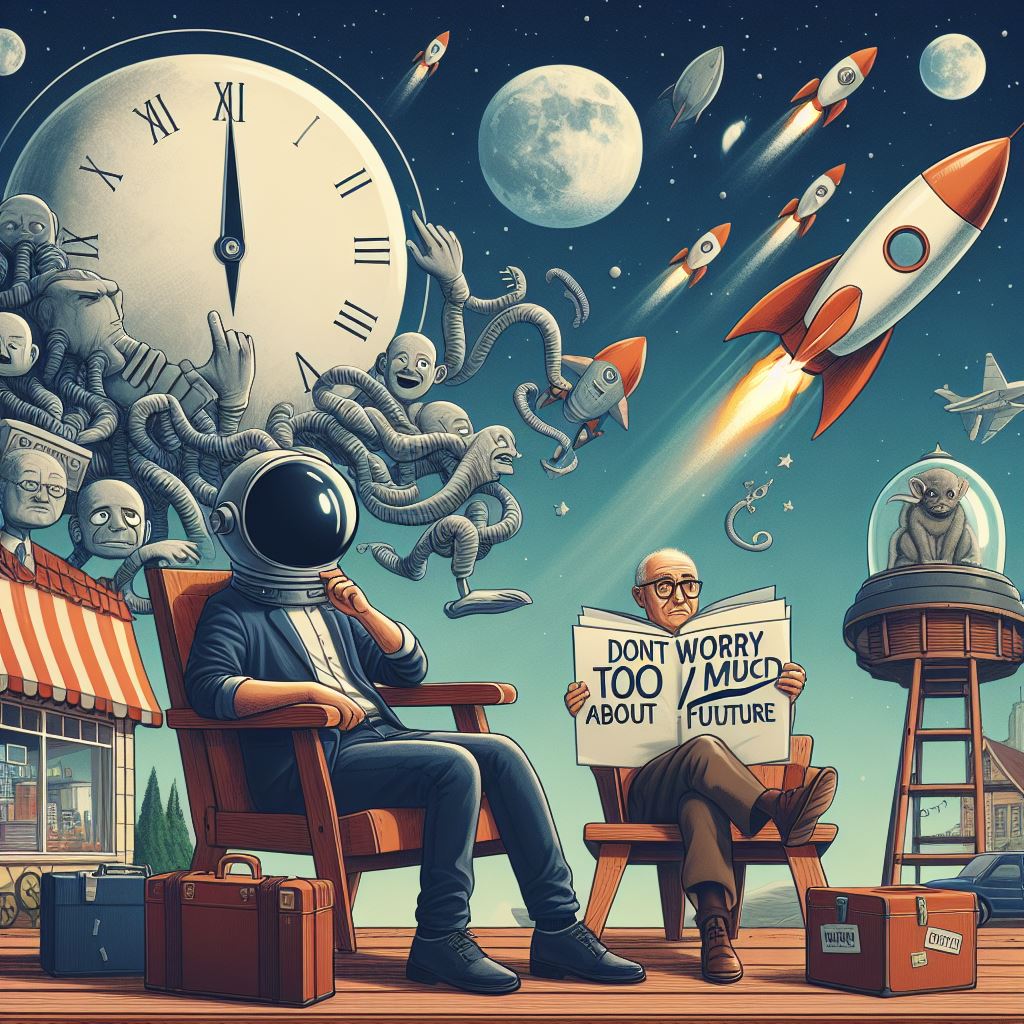
Don't worry too much about the future

Most people worry too much about their future. 

Whereas we should try to live in the present and not worry about what will happen tomorrow.


It's important to strike a balance between planning for the future and living in the present. 

While it's true that excessive worry about the future can detract from enjoying the present moment, some level of future planning can be beneficial for setting goals and achieving them. 

Finding that balance allows us to appreciate the present while still preparing for what lies ahead.

In the modern world, the balance between living in the present and planning for the future can often seem elusive. 

On one hand, there's the constant pressure to secure our future, to plan meticulously, and to anticipate every possible outcome. 

On the other hand, there's the desire to savor the here and now, to immerse ourselves fully in the present moment and not let worries about tomorrow overshadow our experiences today. 

Striking this balance is essential for our mental well-being and overall happiness.

The Dangers of Excessive Worry about the Future

While some level of future planning is necessary for setting goals and making progress in life, excessive worry about the future can be detrimental to our mental health and overall quality of life. 

When we constantly dwell on what might happen tomorrow, we rob ourselves of the joy and fulfillment that can be found in the present moment.

Excessive worry can lead to anxiety, stress, and even depression. 

It can cause us to become preoccupied with potential problems and obstacles, making it difficult to appreciate the beauty and wonder of life as it unfolds around us. 

Moreover, excessive worry can be paralyzing, preventing us from taking action or pursuing our dreams because we're too afraid of what the future might hold.

Finding Balance: Psychology and Behavioral Change

Psychology offers various strategies and techniques to help individuals break free from the cycle of excessive worry and find a healthier balance between planning for the future and living in the present.

Mindfulness and Meditation: Mindfulness practices, such as meditation, teach us to focus our attention on the present moment and cultivate an awareness of our thoughts and feelings without judgment. 

By practicing mindfulness regularly, we can learn to let go of worries about the future and fully engage with what is happening here and now.

Cognitive Behavioral Therapy (CBT): CBT is a widely used therapeutic approach that helps individuals identify and challenge negative thought patterns and beliefs. 

By learning to recognize and reframe anxious thoughts about the future, we can reduce our overall level of worry and anxiety.

Gratitude Practice: Cultivating a practice of gratitude involves regularly reflecting on the things we're thankful for in our lives. 

This can help shift our focus away from worries about the future and towards appreciation for the blessings we have in the present moment.

Setting Boundaries: Learning to set boundaries and prioritize self-care is crucial for managing stress and preventing burnout. 

By establishing limits on how much time and energy we dedicate to worrying about the future, we can create space for relaxation, enjoyment, and meaningful connections with others.

Spiritual Approaches to Embracing the Present Moment

In addition to psychological techniques, many spiritual traditions offer wisdom and practices that can help individuals cultivate a deeper sense of presence and acceptance in their lives.

Yoga and Tai Chi: These ancient practices combine physical movement with breath awareness and meditation to promote relaxation, mindfulness, and a sense of inner peace. 

By practicing yoga or Tai Chi regularly, we can learn to quiet the mind and inhabit our bodies more fully, thus reducing worries about the future.

Mindful Walking or Nature Connection: Spending time in nature and engaging in activities like mindful walking can help us reconnect with the natural world and ground ourselves in the present moment. 

Nature has a way of reminding us of the cyclical nature of life and the importance of being present to fully experience its beauty and wonder.

Spiritual Mindfulness: Many spiritual traditions emphasize the importance of being present and surrendering to the flow of life. 

By letting go of attachment to outcomes and trusting in a higher power or universal intelligence, we can find peace and serenity in the midst of uncertainty about the future.

Tips and Tricks for Living in the Present Moment

In addition to psychological and spiritual approaches, there are many practical tips and tricks that can help individuals worry less about the future and embrace the present moment.

Limit Exposure to Negative News: Constantly consuming negative news and media can contribute to feelings of anxiety and pessimism about the future. 

Limiting your exposure to news and social media can help reduce worry and improve your overall mental well-being.

Practice Self-Care Activities: Engaging in activities that bring you joy, whether it's reading, painting, gardening, or spending time with loved ones, can help you stay grounded and present in the moment.

Focus on What You Can Control: Instead of fixating on things that are beyond your control, focus your energy on taking positive actions and making meaningful choices in the present moment.

Seek Support: If worries about the future become overwhelming, don't hesitate to reach out to friends, family, or a mental health professional for support and guidance.

What People Search and Their Answers

When it comes to worries about the future, people often turn to the internet in search of answers and solutions. 

Some common search queries related to this topic include:

How to stop worrying about the future?

Practice mindfulness: Bring your focus to the present moment through mindfulness meditation or simply by paying attention to your breath, sensations, and surroundings.

Challenge negative thoughts: Recognize and challenge catastrophic thinking patterns by questioning the validity of your worries and reframing them in a more realistic light.

Set aside worry time: Designate a specific time each day to address your worries, allowing yourself to focus on them constructively rather than letting them consume your thoughts throughout the day.

Engage in relaxation techniques: Incorporate relaxation techniques such as deep breathing, progressive muscle relaxation, or yoga to help calm your mind and alleviate physical tension associated with worry.

Take action: Identify concrete steps you can take to address potential concerns about the future, and focus your energy on taking proactive measures rather than ruminating on hypothetical scenarios.

Tips for living in the present moment.

Practice gratitude: Cultivate a habit of regularly acknowledging and appreciating the positive aspects of your life, no matter how small, to foster a sense of contentment and presence.

Engage your senses: Bring your attention to the present moment by fully experiencing your surroundings through your senses—notice the sights, sounds, smells, tastes, and textures around you.

Limit distractions: Minimize multitasking and screen time to allow yourself to fully immerse in whatever activity you're engaged in, whether it's work, conversation, or leisure.

Embrace mindfulness activities: Participate in activities that promote mindfulness, such as meditation, mindful walking, or mindful eating, to cultivate greater awareness and appreciation of the present moment.

Let go of judgment: Practice non-judgmental awareness of your thoughts, feelings, and experiences, accepting them as they are without attaching labels of good or bad.

Ways to overcome anxiety about the future.

Challenge irrational beliefs: Identify and challenge irrational beliefs or cognitive distortions that contribute to your anxiety about the future, replacing them with more rational and balanced perspectives.

Develop coping strategies: Learn and practice coping strategies such as deep breathing, visualization, or progressive muscle relaxation to manage acute anxiety symptoms when they arise.

Seek professional help: Consider seeking support from a mental health professional, such as a therapist or counselor, who can provide personalized guidance and interventions to help you manage your anxiety.

Engage in self-care: Prioritize self-care activities that promote relaxation, stress reduction, and overall well-being, such as regular exercise, adequate sleep, healthy nutrition, and leisure activities.

Focus on the present: Redirect your attention to the present moment whenever you find yourself ruminating on future uncertainties, using mindfulness techniques to anchor yourself in the here and now.

How to find balance between planning for the future and enjoying the present?

Set clear goals: Establish short-term and long-term goals that reflect your aspirations and values, allowing you to plan for the future while providing direction and purpose in the present.

Prioritize tasks: Identify tasks and responsibilities that require immediate attention versus those that can be deferred, striking a balance between addressing current needs and planning for future objectives.

Practice time management: Allocate time for both future-oriented tasks, such as goal-setting and strategic planning, and present-focused activities, such as relaxation, recreation, and spending time with loved ones.

Cultivate flexibility: Remain open to adapting your plans and goals as circumstances change, recognizing that life is inherently unpredictable and that flexibility is essential for maintaining balance and resilience.

Practice gratitude: Cultivate an attitude of gratitude for the blessings and opportunities in your life, acknowledging the beauty and richness of the present moment while working towards future aspirations.

The answers to these queries often echo the strategies and approaches outlined above, emphasizing the importance of mindfulness, self-care, and seeking support when needed.

In conclusion, finding a balance between planning for the future and living in the present is essential for our mental health and overall well-being. 

While it's natural to have concerns about what lies ahead, excessive worry can detract from our ability to fully engage with life and find joy in the present moment. 

By incorporating psychological, spiritual, and practical strategies into our daily lives, we can learn to worry less about the future and embrace each moment with gratitude, mindfulness, and resilience.

Understanding IQ and Its Implications


Unlocking the Power of Intelligence Quotient (IQ)

In the realm of human cognition, the term "intelligence quotient" (IQ) stands as a pillar, guiding our understanding of intellectual capabilities. 

With this comprehensive guide, we delve into the depths of IQ, exploring its origins, significance, controversies, and practical implications.

Understanding Intelligence Quotient (IQ)

At its core, IQ represents a measure of cognitive abilities, encompassing reasoning, problem-solving, memory, and other essential mental faculties. 

Initially conceptualized by French psychologist Alfred Binet in the early 20th century, IQ testing aimed to identify children who might require additional educational support. 

Over time, IQ tests evolved, becoming standardized assessments used worldwide.

The Science Behind IQ Testing

Modern IQ tests, such as the Stanford-Binet Intelligence Scales and the Wechsler Adult Intelligence Scale, rely on statistical analysis to generate a numerical score. 

These scores are often distributed in a bell curve, with the majority of individuals clustering around the average IQ of 100. 

Factors such as age and cultural background are considered in score interpretation, ensuring fair assessment across diverse populations.

Controversies Surrounding IQ

Despite its widespread use, IQ testing remains a subject of debate among psychologists, educators, and policymakers. 

Critics argue that IQ tests may be influenced by socio-cultural factors, potentially disadvantaging certain groups. 

Additionally, concerns arise regarding the oversimplification of intelligence and the limitations of standardized testing in capturing the full spectrum of human cognitive abilities.

Practical Implications of IQ

While IQ scores offer insights into an individual's cognitive aptitude, they are just one piece of the puzzle. 

High IQ may correlate with academic and professional success, but emotional intelligence, creativity, and perseverance also play crucial roles in achievement. 

Moreover, IQ testing can inform educational strategies, career counseling, and interventions for individuals with learning differences.

Enhancing IQ: Myths and Realities

Contrary to popular belief, IQ is not fixed at birth. 

Research suggests that environmental factors, education, and experiences can influence cognitive development throughout life. 

Engaging in activities that stimulate the mind, such as puzzles, reading, and lifelong learning, may enhance cognitive abilities and potentially raise IQ scores.

The Future of IQ

As our understanding of intelligence continues to evolve, so too will the ways we assess and interpret IQ. 

Emerging fields such as cognitive neuroscience and artificial intelligence offer new insights into the nature of intelligence, challenging traditional notions and expanding our conceptual framework. 

Looking ahead, interdisciplinary research and innovative methodologies will shape the future of IQ assessment and its applications.

Intelligence quotient (IQ), thus, remains a cornerstone of psychological assessment, providing valuable insights into cognitive abilities and informing various domains of human endeavor. 

By delving into the origins, controversies, and practical implications of IQ, we gain a deeper understanding of this multifaceted construct and its relevance in an ever-changing world. 

As we navigate the complexities of human intelligence, let us embrace the diversity of cognitive strengths and foster environments that nurture the full potential of every individual.

Boost Your Intelligence with Our Exclusive IQ Testing Kits!

Ready to uncover your true potential? Take the first step towards enhancing your IQ with our cutting-edge IQ testing kits. Whether you're aiming for academic success, career advancement, or personal growth, our products are tailored to help you reach new heights!

Visit our website now to explore our range of IQ testing kits and start your journey towards a brighter future!

Egosurfing: Pros and Cons


Egosurfing, also known as vanity searching, is the practice of searching for your own name or online presence on the internet, typically using search engines like Google or social media platforms. 

The term "ego" in egosurfing implies that individuals engage in this activity to satisfy their desire for self-validation or to boost their self-esteem by tracking what is being said about them online. 

It has become increasingly popular in the age of the internet, social media, and online self-presentation.

Here is a detailed explanation of egosurfing, why people do it, its pros and cons, whether it's necessary or can be avoided, and its potential psychological effects:

Understanding People's Psychology Through Email Analysis

In today's digital age, email has become a primary mode of communication, allowing us to connect with people from various backgrounds and contexts. As we navigate through the vast sea of emails, it is natural to wonder about the psychology and intentions of the senders. In this article, we will explore some insights into understanding people's psychology by analyzing the positioning of your name within the email and other contextual cues.

Positioning of Your Email Address:

Book & Save: Tiqets Kiwi GetYourGuide Amazon
Advertisement
AI Advisor — Ask me anything
Stays active all session
Hi! Ask me about travel, immigration, Spain, India, or any topic on Latestfoto.com. I find posts, affiliate deals, and follow-up questions for you.
Best places in Spain? Cheap flights Madrid US immigration 2026 India travel guide Free tours Europe
✨ Free AI Skin Analysis! Try Now →

Flight

facebook

Featured Post

La Alpujarra Travel Guide: Villages, History, Food & Stay

Andalucía, Spain · Granada & Almería Provinces La Alpujarra The Complete Guide to Spain's Hidden Mountain Region ...

Last 30 days' visitors

AI Advisor
AI Advisor

Look what is published:

Try Desktop
Purchase from

chat

Ask a Question

Enhance Your Success with Increased Visitor Engagement!
Ready to leave your mark? Partner with us and witness your business flourish!

7 Days-Popular Articles


How to Find Articles Relevant to Your Interest.

Top Internet Search Topics.

Join Our Writing Community!

🚀✍️ Embrace your passion for words and turn your free time into an exciting writing adventure & earning! Collaborate with us and elevate your writing game. 🌟

🚀✍️ Explore the world of guest writing and enjoy the added bonus of a backlink to your blog. Let's create captivating content together! 🌟

Scan QR code. Buy me a coffee.

Enjoying This Website?

Give Us Your Vote!

Follow Us on Facebook

Follow Us on Facebook

Follow Us Now!

Buy & Sell Your Video

Have an interesting video? Earn money by sharing it with us.

Learn a Language for Travel, PR, or Citizenship

Offer Your Own Language
-------------------------
See More. Do More. Share More.
Join Our Newsletter

Get exclusive discounts & travel tips straight to your inbox.

Please type this word to confirm you're human:

© Latestfoto.com — Questions. Curiosity. Discoveries.