Showing posts with label Middle East (Topic). Show all posts

Strait of Hormuz

Why the Strait of Hormuz Is Always Important  

Why the World Is Watching Now

The Strait of Hormuz has been one of the most strategic maritime chokepoints in the world for decades. But in 2025, its relevance has taken on renewed urgency, raising global concerns. If you’ve ever wondered why the Strait of Hormuz matters so much to the world economy, oil prices, and international politics, you're not alone. This article presents detailed its historic and modern-day importance, current tensions, and what alternatives exist for global trade routes.

Map of the Strait of Hormuz showing oil transit routes

What Is the Strait of Hormuz?

The Strait of Hormuz is a narrow waterway, just 21 miles wide at its narrowest point, located between the Persian Gulf and the Gulf of Oman. It separates Iran to the north from the United Arab Emirates and Oman to the south. Despite its small width, it plays an outsized role in international maritime logistics.

This narrow passage connects the massive oil fields of the Middle East to the rest of the world, making it a vital artery in the global energy system. It is often described as the "jugular vein of the global oil supply."

Why Is the Strait of Hormuz So Important?

  • Energy Transit Hub: Around 20% of the world’s oil passes through the Strait of Hormuz—more than 18 million barrels per day.
  • Global Shipping Route: It is one of the busiest shipping lanes in the world for oil, natural gas, and petroleum-based products.
  • Geopolitical Flashpoint: The Strait lies at the center of one of the most volatile regions on Earth, the Middle East.
  • Limited Alternatives: Few viable options exist for rerouting such a vast volume of oil if the Strait were blocked or attacked.

Due to these factors, the Strait of Hormuz has been a strategic chessboard for superpowers and regional players alike.

Strait of Hormuz in 2025

Why It’s Back in Global Headlines

Recently, the Strait of Hormuz has returned to the global spotlight. A combination of geopolitical instability, military posturing, and increased naval activity has escalated tensions. Here's why:

1. Rising Tensions Between Iran and Western Powers

Iran has historically threatened to block the Strait in response to Western sanctions. In 2025, ongoing disputes over nuclear policy and oil export controls have once again ignited fears of closure.

2. Attacks on Commercial Tankers

Several recent attacks on oil tankers passing through the Strait have sparked global alarm. Though responsibility has not been definitively proven, fingers have pointed toward Iranian-backed groups, adding further pressure to an already strained environment.

3. Increased Military Presence

Naval deployments from the United States, the UK, and regional Gulf states have turned the Strait into a heavily militarized zone. Military exercises, drone surveillance, and warship traffic have all increased.

4. Oil Price Volatility

Whenever the Strait is threatened, oil prices spike. This is because any disruption in this key route can impact global supply chains, from Asia to Europe to North America.


Economic and Energy Impact

Why the World Should Care

The global economy is still significantly reliant on fossil fuels. Countries like China, India, Japan, and even the European Union import large quantities of oil that pass through the Strait of Hormuz.

If this route were to be blocked or compromised for even a few days, the resulting shockwaves would be felt in:

  • Fuel Prices: Gasoline and diesel prices would surge worldwide.
  • Inflation: Rising energy costs would trigger inflationary pressures across economies.
  • Supply Chains: Delays in oil and gas shipments would disrupt manufacturing and transportation globally.

This is why insurance premiums for tankers operating in the region have also increased dramatically.

Are There Alternatives to the Strait of Hormuz?

Given the Strait’s critical nature, multiple nations and companies have looked for alternative routes to reduce dependency. Let’s look at the most feasible options:

1. The East-West Pipeline (Saudi Arabia)

Saudi Arabia built the East-West Pipeline (Petroline) to bypass the Strait entirely. It allows oil to be transported from the Eastern Province to the Red Sea port of Yanbu. However, its capacity is limited—roughly 5 million barrels per day, a fraction of what the Strait handles.

2. UAE's Fujairah Port

The United Arab Emirates developed a pipeline from Abu Dhabi to the port of Fujairah, located outside the Strait. It helps export oil without transiting the chokepoint but still doesn’t come close to replacing Hormuz in volume.

3. Potential Overland Routes Through Iraq or Turkey

Though theoretically viable, these alternatives are fraught with their own geopolitical risks and logistical challenges. Turmoil in Iraq and strained relations between Turkey and other nations make this a complicated option.

In short, there is no full substitute for the Strait of Hormuz, making it a constant point of strategic interest.

The Role of Technology and Diplomacy

Satellite monitoring, maritime drones, and real-time shipping data are now used to track tanker movements and potential threats in the Strait. Meanwhile, diplomatic efforts continue to stabilize the region. The United Nations, EU, and regional coalitions are all working behind the scenes to keep the Strait open and secure.

Environmental Risks

In the event of a naval confrontation or tanker destruction, the environmental consequences could be devastating. Oil spills in such a confined marine area would impact marine biodiversity, local fisheries, and even the Gulf's tourism industries.

Why It Matters to the Average Person

You might not live near the Middle East, but if you drive a car, use plastics, or rely on global supply chains, the Strait of Hormuz matters to you. Any disruption could mean higher gas prices, more expensive flights, or increased costs for everyday goods. In a globally connected world, a small waterway 3,000 miles away affects your local economy directly.

Conclusion

Strait of Hormuz Is Small But Mighty

As we move through 2025 and beyond, the Strait of Hormuz remains a critical geopolitical pressure point. Its control, safety, and stability are essential for global energy security and economic well-being. Despite efforts to create alternatives, no other route currently matches its scale and strategic placement.

Governments, corporations, and citizens alike should stay informed about what happens in this tiny waterway. Because, as history has shown us time and again, the Strait of Hormuz is where small moves make global waves.

Search:

  • Strait of Hormuz importance
  • global oil supply routes
  • Middle East shipping lane
  • Iran Strait threat
  • alternatives to Strait of Hormuz
  • energy chokepoints 2025
  • why Strait of Hormuz matters
  • Gulf tensions oil
  • oil prices Middle East
  • maritime trade security

If you're interested in tracking updates about this topic, consider bookmarking our website or following our latest geopolitical analysis at Latestfoto.com.

📌 Call to Action: Want to advertise your global policy, oil & gas, or defense-related brand? Click here to place your ad in this article or reach out for sponsored content opportunities.

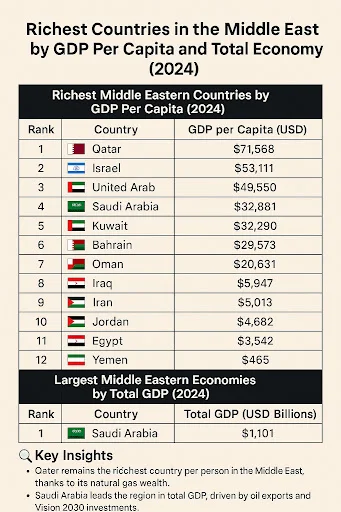
Richest Countries in the Middle East by GDP Per Capita and Total Economy (2024)

The Middle East is home to some of the wealthiest nations in the world. In this article, we compare countries by two key economic metrics: GDP per capita and total GDP. These rankings help identify the richest countries in the region in 2024.

🏆 GDP Per Capita: Highest Earning Countries in the Middle East (2024)

Rank Country GDP per Capita (USD)
1🇶🇦 Qatar$71,568
2🇮🇱 Israel$53,111
3🇦🇪 United Arab Emirates$49,550
4🇸🇦 Saudi Arabia$32,881
5🇰🇼 Kuwait$32,290
6🇧🇭 Bahrain$29,573
7🇴🇲 Oman$20,631
8🇮🇶 Iraq$5,947
9🇮🇷 Iran$5,013
10🇯🇴 Jordan$4,682
11🇪🇬 Egypt$3,542
12🇾🇪 Yemen$465

Source: Visual Capitalist

💰 Total GDP: Largest Middle Eastern Economies by Size (2024)

Rank Country Total GDP (USD Billions)
1🇹🇷 Turkey$1,344
2🇸🇦 Saudi Arabia$1,101
3🇦🇪 United Arab Emirates$536.8
4🇮🇱 Israel$530.1
5🇮🇷 Iran$469.1
6🇪🇬 Egypt$469.1
7🇶🇦 Qatar$235.5
8🇰🇼 Kuwait$183.6
9🇮🇶 Iraq$108.9
10🇴🇲 Oman$108.9

Source: Wikipedia

🔍 Key Economic Insights for 2024

  • Qatar remains the richest country per person in the Middle East, thanks to its natural gas wealth.
  • Saudi Arabia leads the region in total GDP, driven by oil exports and Vision 2030 investments.
  • UAE combines oil, tourism, and finance for a balanced economic power.

Conclusion

From oil-rich Gulf states to tech-driven economies like Israel, the Middle East shows economic diversity in 2024. Understanding GDP per capita and total GDP helps compare national wealth and development in the region.

Bidet

A bidet is a bathroom fixture designed for personal hygiene, primarily used for washing the genital and anal areas after using the toilet. 

It is common in many countries, especially in Europe, Asia, and the Middle East, and is considered more hygienic than using toilet paper alone.

Types of Bidets

1. Standalone Bidet – A separate fixture next to the toilet.

2. Bidet Toilet Seat – A toilet seat with a built-in bidet function.

3. Handheld Bidet Sprayer – A spray nozzle attached to the toilet water supply.

4. Bidet Attachment – A simple device added under the toilet seat.

How to Use a Bidet

For Standalone Bidets:

1. Use the toilet first.

2. Move to the bidet and sit or squat over it.

3. Adjust the water temperature and pressure (if available).

4. Use your hand to help clean the area if needed.

5. Dry with toilet paper or a towel.

For Bidet Toilet Seats or Attachments:

1. Stay seated after using the toilet.

2. Activate the bidet nozzle using the control panel or knob.

3. Adjust water pressure and temperature if needed.

4. Let the water clean you for a few seconds.

5. Use toilet paper or a built-in dryer to dry yourself.

For Handheld Bidet Sprayers:

1. Hold the sprayer in one hand while seated on the toilet.

2. Aim the nozzle at the area to be cleaned.

3. Squeeze the trigger to release water.

4. Adjust pressure as needed.

5. Pat dry with toilet paper or a towel.

Precautions to Take

Water Pressure: Start with low pressure to avoid discomfort.

Temperature Control: Ensure the water is not too hot to prevent burns.

Hygiene: Clean the bidet nozzle regularly to prevent bacterial buildup.

Correct Usage: Avoid spraying water too forcefully, especially for sensitive areas.

Public or Shared Bidets: If using a public or shared bidet, ensure cleanliness before use.

Halal Food


What is Halal?

"Halal" is an Arabic term meaning "permissible" or "lawful" in Islam.

When applied to food, it refers to food that adheres to Islamic dietary laws, which are derived from the Quran. 

The opposite of halal is "haram," meaning forbidden.

History of Halal

The concept of halal food comes from Islamic teachings, which specify what is permissible for Muslims to consume. 

These guidelines have been followed for centuries and are an important part of Islamic culture and tradition. 

The principles of halal are rooted in the Quran, the holy book of Islam, and the Hadiths (sayings and actions of the Prophet Muhammad).

Who Eats Halal Food?

Primarily, halal food is consumed by Muslims, as adhering to halal dietary rules is a religious obligation.

However, halal food can be eaten by anyone, regardless of religion, as it does not contain any prohibited (haram) ingredients. 

Some non-Muslims choose halal food due to its ethical treatment of animals or the absence of certain additives like alcohol.

Is Halal Religious?

Yes, halal food is based on Islamic religious principles. 

Muslims are required to eat halal food to maintain spiritual purity. 

It is an essential part of practicing Islam, particularly during special events like Ramadan and Eid.

How is Halal Food Prepared?

For food to be considered halal, it must meet specific guidelines:

Meat: The animal must be slaughtered in a specific way (known as "dhabiha"). 

A prayer is recited during slaughter, and the animal must be healthy and treated humanely. 

The blood must be fully drained from the carcass.

Prohibited Ingredients: Pork and its by-products, alcohol, and any intoxicants are strictly forbidden.

Cleanliness: The food preparation areas must be clean and free from contamination by haram substances.

Is There Any Strict Rule?

Yes, strict rules govern what is considered halal, particularly regarding the method of slaughter and the prohibition of haram ingredients like pork and alcohol.

Cross-contamination with haram items can render food non-halal, so care must be taken during preparation.

Who Can Eat Halal Food?

Anyone can eat halal food. While Muslims are required to consume halal food, non-Muslims can also enjoy it. 

Some people opt for halal food due to its ethical and hygienic standards.

Can Any Restaurant Prepare Halal Food?

Any restaurant can prepare halal food, provided it follows the halal guidelines for sourcing ingredients and preparation. 

Many restaurants seek halal certification to assure customers that their food is compliant with Islamic dietary laws.

Where to Find Halal Food in Major Cities?


Porto, Portugal

Maus Hábitos – This restaurant serves a variety of dishes, including halal options.

Muzu - Modern Sushi – Offers halal-certified sushi dishes.

Tavi Confeitaria – A pastry shop with some halal-friendly options.

Madrid, Spain

Alzahra – A well-known halal restaurant serving Middle Eastern cuisine.

Raja Mahal – A popular Indian and Pakistani restaurant offering halal food.

Asador de Aranda – Specializes in halal-certified grilled meats.

Berlin, Germany

Hasir Kreuzberg – Famous for its Turkish halal kebabs.

Burger Zone – Offers halal-certified burgers.

Café Rissani – Serves Moroccan-style halal food.

Tokyo, Japan

Gyumon – A halal-friendly Yakiniku (Japanese BBQ) restaurant.

Sekai Café – Offers a range of halal dishes and is popular with tourists.

Naritaya Halal Ramen – Famous for its halal ramen.

Paris, France

Le Wok Saint Germain – Serves halal Asian fusion cuisine.

Les Enfants Terribles – Offers halal-friendly French cuisine.

Chez Michel – A popular spot for halal French dishes.

New York, USA

The Halal Guys – Famous for its halal street food, especially gyros and falafel.

Kashmir 9 – A restaurant serving halal Indian and Pakistani dishes.

Sahara East – Offers Middle Eastern halal dishes.

London, UK

Dishoom – A trendy Indian restaurant offering halal meat options.

Meat & Shake – A burger joint with a fully halal menu.

Hankies Café – Offers halal-friendly Indian street food.

Can Halal Food Be Vegetarian or Vegan?

Yes, vegetarian and vegan foods are typically considered halal, as long as they don’t contain alcohol, intoxicants, or any other forbidden (haram) substances. 

Since these foods naturally exclude meat, pork, and animal by-products, they align with halal guidelines. 

However, to be strictly halal, attention must still be paid to cross-contamination and the presence of any alcohol-based ingredients (such as in cooking or sauces). 

For example, certain additives, flavorings, or preservatives used in processed vegetarian or vegan foods may contain haram ingredients, so it’s important to verify the ingredients list or ask for halal certification.

Suggestions and Tips for Eating Halal Food

Check for Certification: Many halal restaurants will display a halal certification on their premises or website.

Ask About Preparation: If you’re in a non-halal restaurant, ask if the kitchen can prepare your meal without haram ingredients or contamination.

Download Halal Apps: There are several apps, like "Zabihah," "HalalTrip," or "HappyCow" (for vegetarian/vegan halal options), which help you find halal-certified restaurants nearby.


Avoid Alcohol-Based Sauces: Be cautious of sauces or dishes cooked with alcohol, as these are not halal. 

Even vegetarian dishes with alcohol-based cooking wine or sauces would not be considered permissible.

Be Open to Diverse Cuisine: Halal food is not limited to Middle Eastern or South Asian cuisine. 

Many restaurants in Europe, Asia, and North America offer halal options across various cuisines, such as Japanese, French, or even fast food.

Check Grocery Products: If cooking at home, check for halal certification on food labels when shopping for meat or processed foods. 

Halal-certified products are increasingly available in major supermarkets.

Be Aware of Local Customs: In some non-Muslim-majority countries, halal food options may be more limited, so research in advance.

Q1: Can non-Muslims eat halal food?

A1: Yes, halal food is not restricted to Muslims. Anyone can eat it.

Q2: Is halal food healthier?

A2: While halal food itself is not necessarily healthier, the ethical standards for meat preparation may appeal to people looking for humane animal treatment.

Q3: Can halal food be served in non-Muslim countries?

A3: Yes, halal food is widely available in non-Muslim-majority countries, particularly in diverse cities like London, New York, and Paris.

Q4: Is there halal certification?

A4: Yes, many countries have halal certification authorities that inspect and certify halal food products and restaurants.

Q5: Can halal food be vegetarian?

A5: Yes, vegetarian and vegan foods are typically considered halal as long as they don’t contain alcohol or other forbidden substances.

Q6: Can non-Muslims prepare halal food?

A6: Yes, non-Muslims can prepare halal food as long as they adhere to the proper guidelines of halal food preparation. 

There is no restriction on who can cook or serve halal food, as long as the rules are followed.

Q7: Is kosher food the same as halal?

A7: Kosher food and halal food have some similarities, particularly in the slaughtering of animals, but they are not the same. 

The rules for kosher food come from Jewish dietary laws and differ in some aspects, such as the allowance of alcohol in kosher foods, which is not allowed in halal.

Q8: How do I verify if a restaurant is truly halal?

A8: Restaurants often display halal certification issued by trusted Islamic authorities. 

You can also ask staff about their halal practices, or check reviews from other Muslim diners.

Q9: Can halal food be served at non-Muslim events?

A8: Yes, halal food can be served at any event, regardless of religious affiliation. 

Many people choose halal food because of the ethical standards it follows or to cater to Muslim guests.

Q10: Is organic food automatically halal?

A10: No, organic food is not automatically halal. 

While organic food may meet higher standards of natural farming, it still must follow halal guidelines, especially concerning animal slaughter and the exclusion of haram ingredients.

With this understanding, you’ll have a better grasp of halal food practices, how it’s prepared, and where to find it in major cities. 

Whether you are Muslim or just someone interested in ethical and clean eating, halal food offers a range of options, from traditional Middle Eastern dishes to modern cuisine around the world.

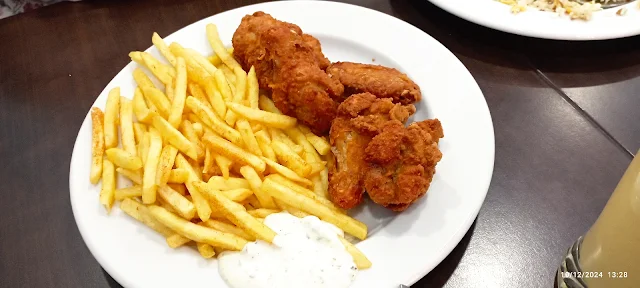
The Halal food which we have taken in lunch in Porto Portugal: 


Booking.com

Fly for Less with Skyscanner

Save big on your next flight with Skyscanner.

Compare Airlines, Dates, and Prices

Easily find the best options for your trip.

Search the Best Rates on Flights

Get the best deals with just a few clicks.

Plan Your Entire Trip with Skyscanner

Search flights, hotels, and car rentals to popular destinations.

Grab the Best Deals on Flights, Hotels, and Cars

Compare Now

How is Middle East conflict affecting international flights?


The ongoing conflict in the Middle East, particularly in Israel, Gaza, and Lebanon, has significantly impacted international flights.

Many airlines have suspended or rerouted flights to avoid affected airspaces. 

For instance, Qatar Airways, Emirates, and Flydubai have suspended flights to destinations such as Iran, Iraq, and Lebanon, with some flight services restricted or canceled until further notice.

Long-haul flights are also facing challenges, as airlines are rerouting to avoid conflict zones.

The European Union’s Aviation Safety Agency (EASA) has issued advisories recommending airlines avoid flying over certain Middle Eastern countries, including Israel and Lebanon, which has caused more disruptions. 

British Airways, Lufthansa, and Delta Air Lines are among those that have suspended flights to Tel Aviv, while other airlines like Transavia have canceled flights to Amman and Beirut until early 2025.

If you're planning to travel through the region, it's important to reconfirm your flights, as schedules are changing rapidly depending on the evolving situation.


Alternative Routes

Given the significant disruptions to flights across the Middle East, travelers should consider alternative routes and transportation options if they need to pass through or near the region.

Rerouted Flights: Some airlines continue to operate by rerouting flights around conflict zones. 

This option may increase travel time, but it could be a safer alternative if you need to travel to nearby regions like Turkey, Cyprus, or Egypt. 

Emirates and Qatar Airways are rerouting flights, though availability may be limited.

Alternate Airports: If your destination is affected, consider flying to less impacted airports in neighboring countries, such as those in Turkey (Istanbul), Cyprus, or the UAE (Dubai or Abu Dhabi), which can act as a hub for further travel by road or other means to your final destination.

Connecting via Europe or Asia: Travelers needing to bypass Middle Eastern airspace may also choose to fly via Europe (e.g., Athens, Rome, or Istanbul) or Asia (e.g., Singapore, Hong Kong) and then connect to destinations farther afield. Some airlines are adjusting routes to avoid the region entirely.

Non-Air Travel: If you're already in the region and air travel is unavailable or uncertain, overland travel may be an option. 

While not feasible for all destinations, bus or car routes from countries like Jordan, Cyprus (via ferry), or Egypt could provide alternatives.

Travel Insurance and Flexibility: When planning travel through or near conflict zones, ensure your insurance covers disruptions and cancellations. 

Opt for flexible booking options to accommodate last-minute changes.

For more specific guidance, checking directly with your airline and monitoring travel advisories is essential.

Movies on Eli Cohen


Eli Cohen, the famous Israeli spy, has been the subject of various movies and TV shows due to his remarkable espionage work in Syria during the 1960s. 

Some notable productions based on his life include:

The Spy (2019)

Format: TV miniseries

Platform: Netflix

Starring: Sacha Baron Cohen as Eli Cohen

Overview: This is a six-part series that dramatizes Eli Cohen's deep-cover espionage in Syria. 

It focuses on his infiltration into the Syrian government and how he helped Israel gather crucial intelligence during that time. 

Sacha Baron Cohen’s performance was highly praised for portraying the intensity of Cohen's dual life.

The Impossible Spy (1987)

Format: TV movie

Overview: This is an older film that also focuses on Eli Cohen’s life as an Israeli spy in Syria. 

It presents how he penetrated the highest levels of Syrian society and the military, eventually leading to his capture and execution. 

It’s one of the first movies to depict his story and was well-received at the time.

Eli Cohen: Our Man in Damascus (2018)

Format: Documentary

Overview: This documentary explores Eli Cohen's life and legacy through interviews and historical footage. 

It’s a more factual retelling of his espionage activities and their impact on the state of Israel.

The Mossad’s Greatest Spy: Eli Cohen (2016)

Format: Documentary

Overview: This documentary offers an in-depth look at Eli Cohen’s mission in Syria and his contribution to Israeli intelligence. 

It features archival footage, interviews with experts, and insights into the Mossad’s role in shaping his mission.

L'espion qui venait d'Israël (The Spy Who Came from Israel) (1990)

Format: TV movie

Overview: This French production focuses on Eli Cohen's infiltration of the Syrian political and military elite. 

It gives a European perspective on Cohen’s espionage work and the historical significance of his activities.

The Man Who Fell to Earth: Eli Cohen (2019)

Format: Documentary

Overview: A lesser-known documentary that emphasizes Eli Cohen’s transition from a regular citizen to a key player in the world of espionage. 

It includes accounts from people who knew him personally, and experts who analyze his influence on Israel’s security.

Operation Damocles (2010)

Format: Documentary

Overview: Although this documentary focuses primarily on the broader context of Israeli espionage in the Middle East, it also covers Eli Cohen’s mission. 

The documentary touches on how Operation Damocles, which targeted German scientists aiding Egypt's missile program, was related to broader Israeli espionage efforts, with references to Cohen's infiltration into Syria.

The Executioner (Ha-Tokeah) (1971)

Format: Film

Overview: This Israeli film is loosely inspired by the life of Eli Cohen and his espionage activities in Syria. 

While not a direct biopic, it reflects the themes of espionage, identity, and the personal costs of living a double life as a spy. 

The film is a dramatic thriller set against the backdrop of Middle Eastern politics.

Spy Wars: The Spying Game (2020)

Format: TV Documentary Series

Platform: Smithsonian Channel

Episode: One of the episodes of this series focuses on Eli Cohen’s espionage work. 

The show, hosted by Damian Lewis, delves into various spy stories around the world, and the episode about Cohen highlights his mission in Syria, the Mossad’s strategies, and the high-risk stakes involved.

Cohen: All for the Homeland (Cohen: HaKol LeMa'an HaMoledet) (2007)

Format: Documentary

Overview: This Israeli documentary provides an extensive and emotional recount of Eli Cohen’s mission, arrest, and execution. 

It includes interviews with historians, his family members, and colleagues from the Mossad. 

It offers a deeper look into his motivations and the impact his work had on his loved ones.

The Shadow of the Giant: Eli Cohen’s Spy Story (2017)

Format: Documentary (International Release)

Overview: This documentary follows Eli Cohen’s undercover life in Syria, exploring his recruitment by the Mossad and the intelligence he gathered that influenced Israel’s success in the Six-Day War. 

It focuses on the larger-than-life persona Cohen created while infiltrating Syria’s high society, shedding light on his methodology as a spy.

Espionage: Eli Cohen (2008)

Format: TV Documentary Series Episode

Platform: BBC (Part of a broader espionage documentary series)

Overview: This episode focuses on Cohen’s life and mission in Syria, detailing how he rose to power within the Syrian political and military infrastructure. 

It also covers his capture, trial, and execution, reflecting on how his work helped shape the Middle East.

These additional films and documentaries further explore Eli Cohen's espionage career, each from different angles—some emphasizing drama, others focusing on historical context or emotional impact.

These productions highlight different aspects of Eli Cohen’s life, from dramatic interpretations to factual documentaries.

If you're looking for a compelling and comprehensive portrayal of Eli Cohen's life, we would recommend starting with "The Spy" (2019) on Netflix. Here's why:

Engaging Drama: It's a dramatized miniseries that dives deeply into the personal and professional struggles Cohen faced as an undercover spy. 

Sacha Baron Cohen’s performance adds emotional depth, portraying the tension of leading a double life.

Cinematic Quality: The production values are high, with excellent cinematography, direction, and a gripping narrative arc that keeps you hooked.

Character Exploration: The series balances Cohen's personal life, including his relationship with his wife, with his work in Syria, giving you a more rounded understanding of him as a person.

For something more factual, "The Mossad’s Greatest Spy: Eli Cohen" (2016) or "Eli Cohen: Our Man in Damascus" (2018) are solid choices. 

These documentaries offer historical accuracy and insights into his espionage activities without the dramatization, perfect if you prefer a more detailed and analytical approach.

Starting with "The Spy" will give you an entertaining yet faithful account of Cohen's life, followed by one of the documentaries for deeper context.

Booking.com

Fly for Less with Skyscanner

Save big on your next flight with Skyscanner.

Compare Airlines, Dates, and Prices

Easily find the best options for your trip.

Search the Best Rates on Flights

Get the best deals with just a few clicks.

Plan Your Entire Trip with Skyscanner

Search flights, hotels, and car rentals to popular destinations.

Grab the Best Deals on Flights, Hotels, and Cars

Compare Now

Wonders of Turkmenistan


Exploring the Wonders of Turkmenistan by A Journey Through Ancient Treasures and Modern Marvels. 
Turkmenistan, where it is located, why very few tourists visit this country, How many tourist visited the country in recent years, population, religions, culture, tradition, and economy and its rank in world, What can be visited and How, How to reach there, Tour package, Cost of a 7 day-tour, Visa, Food, Suggestions and Tips.  

Introduction to Turkmenistan

Location: Turkmenistan is a country located in Central Asia, bordered by the Caspian Sea to the west, Iran to the south, Afghanistan to the southeast, Uzbekistan to the east, and Kazakhstan to the northwest.

Population: As of 2024, Turkmenistan has a population of approximately 6 million people.

Religions: The predominant religion in Turkmenistan is Islam, with the majority of the population being Sunni Muslims. 

There are also small communities of other religious groups, including Christians and Jews.

Culture and Tradition: Turkmenistan's culture is deeply rooted in its nomadic heritage, with a strong emphasis on traditional music, dance, and crafts. 

The Turkmen people are known for their hospitality, vibrant folklore, and traditional ceremonies such as weddings and horse races. 

The country is famous for its carpets, which are a significant part of Turkmen art and culture.

Economy and Global Ranking: Turkmenistan's economy is largely driven by natural gas exports, which account for a significant portion of its GDP. 

The country is one of the world’s largest producers of natural gas. 

Despite its wealth in natural resources, Turkmenistan is relatively isolated from the global economy. 

The World Bank ranks it as a lower-middle-income economy.

Tourism in Turkmenistan

Why Few Tourists Visit: Turkmenistan is one of the lesser-visited countries in the world due to its strict visa policies, limited international flight connections, and its relative isolation. 

Additionally, the country’s political climate and restrictions on freedom of movement can deter travelers.

Tourist Statistics: In recent years, the number of international tourists visiting Turkmenistan has been modest, typically around 100,000 visitors per year. 

This number has been relatively stable, with occasional fluctuations due to global travel trends and political factors.

What to Visit:

  1. Ashgabat:

    • Architecture: Known for its grandiose and futuristic architecture, including the Arch of Neutrality, the Turkmenbashi Palace, and numerous marble buildings.
    • Museums: The National Museum of Turkmenistan provides insights into the country's history and culture.
  2. Mary:

    • Merv: The ancient city of Merv is a UNESCO World Heritage Site, renowned for its archaeological ruins and historical significance as part of the Silk Road.
  3. Dasoguz:

    • Kunya-Urgench: Another UNESCO World Heritage Site, Kunya-Urgench boasts ancient minarets and mausoleums from the Khorezmian Empire.
  4. Gonur Depe:

    • Archaeological Site: An ancient city from the Bronze Age, offering a glimpse into early urbanization and trade in the region.
  5. Darvaza Gas Crater:

    • The "Door to Hell": A natural gas field that has been burning since it was set alight in the 1960s. This dramatic site is a must-see for adventurous travelers.

How to Reach:

  • By Air: The most common way to enter Turkmenistan is by flying into Ashgabat International Airport (ASB). There are limited direct flights from major cities in Europe, Asia, and the Middle East.
  • By Land: Traveling by land is challenging due to Turkmenistan’s remote location and the necessity for a visa. There are border crossings with Iran, Uzbekistan, and Kazakhstan, but these are generally less accessible for tourists.

Visa Requirements:

  • Visa: Most visitors need a visa to enter Turkmenistan. 
  • Visa applications typically require an invitation letter from a local travel agency or host, proof of accommodation, and a passport with at least six months of validity. 
  • The visa process can be time-consuming, so it's advisable to apply well in advance.

Tour Packages and Costs:

  • Tour Packages: Various travel agencies offer guided tours to Turkmenistan, often including visits to major cities and historical sites. 
  • A 7-day tour package generally costs between $1,500 and $3,000 per person, depending on the level of luxury and the inclusions.
  • Cost of a 7-Day Tour: The cost typically includes accommodation, transportation, meals, and guided tours. 
  • Additional expenses may include visa fees, international flights, and personal expenditures.

Food:

  • Cuisine: Turkmen cuisine features dishes such as plov (rice pilaf), shashlik (grilled meat skewers), and various bread and dairy products. 
  • Meals are often hearty and include lamb or beef, rice, and vegetables.
  • Dining: Local restaurants and street food vendors offer a variety of traditional dishes. 
  • In larger cities like Ashgabat, there are also international dining options.

Suggestions and Tips:

  1. Respect Local Customs: Dress modestly, particularly when visiting religious sites, and be aware of local customs and etiquette.
  2. Currency: The local currency is the Turkmenistan Manat (TMT). 
  3. It's advisable to carry cash, as credit card facilities can be limited.
  4. Language: Turkmen is the official language, but Russian is also commonly spoken. Learning a few basic phrases or having a translation app can be helpful.
  5. Health and Safety: Ensure you have appropriate travel insurance and check for any recommended vaccinations before traveling. Follow local advice regarding safety and health.
  6. Travel Guides: Consider hiring a local guide or joining an organized tour to navigate the country and ensure a smooth travel experience.

Exploring Turkmenistan offers a unique opportunity to experience a land of rich history, stunning landscapes, and intriguing culture. 

Despite its challenges, those who venture here are rewarded with a truly memorable journey.

7-Day Itinerary for Turkmenistan to Discover Ancient Wonders and Modern Marvels

Day 1: Arrival in Ashgabat

  • Morning:

    • Arrival at Ashgabat International Airport: Transfer to your hotel for check-in and rest.
    • Hotel Check-in: Freshen up and prepare for your first day of exploration.
  • Afternoon:

    • City Tour: Start with a guided tour of Ashgabat. Visit:
      • Arch of Neutrality: A towering structure with panoramic views of the city.
      • Turkmenbashi Palace: A grand building showcasing Turkmen architecture.
  • Evening:

    • Dinner: Enjoy a traditional Turkmen meal at a local restaurant.
    • Rest: Return to the hotel for an overnight stay.

Day 2: Explore Ashgabat

  • Morning:

    • National Museum of Turkmenistan: Explore the country’s history, culture, and artifacts.
    • Erk Cultures Center: Discover the heritage of Turkmenistan’s diverse cultures.
  • Afternoon:

    • Gokdepe Mosque: Visit this impressive mosque, one of the largest in Central Asia.
    • Tolkuchka Bazaar: Experience local markets and shop for traditional crafts and souvenirs.
  • Evening:

    • Dinner: Sample local cuisine at a different restaurant.
    • Free Time: Explore Ashgabat at your leisure.

Day 3: Journey to Merv

  • Morning:

    • Drive to Mary: Depart Ashgabat for a drive to Mary (approx. 4-5 hours).
    • Check-in: Arrive in Mary and check in to your hotel.
  • Afternoon:

    • Merv Archaeological Site: Explore this UNESCO World Heritage Site, an ancient Silk Road city with well-preserved ruins.
  • Evening:

    • Dinner: Enjoy dinner at a local restaurant in Mary.
    • Rest: Return to the hotel for an overnight stay.

Day 4: Discover Kunya-Urgench

  • Morning:

    • Drive to Kunya-Urgench: Travel to this ancient city (approx. 2 hours from Mary).
    • Explore Kunya-Urgench: Visit historical sites including:
      • Kutlug Timur Minaret
      • Tomb of Turabek Khanym
      • Ancient City Ruins
  • Afternoon:

    • Return to Mary: Drive back to Mary.
    • Free Time: Explore Mary or relax at the hotel.
  • Evening:

    • Dinner: Try a new local restaurant in Mary.
    • Rest: Overnight stay in Mary.

Day 5: Visit Dasoguz and Darvaza Gas Crater

  • Morning:

    • Drive to Dasoguz: Head towards Dasoguz (approx. 2 hours from Mary).
    • Dasoguz City Tour: Brief exploration of the city.
  • Afternoon:

    • Darvaza Gas Crater: Drive to the Darvaza Gas Crater (approx. 2-3 hours from Dasoguz). Experience the “Door to Hell,” a burning gas field.
    • Picnic Lunch: Enjoy a picnic near the crater.
  • Evening:

    • Return to Ashgabat: Drive back to Ashgabat (approx. 4 hours).
    • Dinner: Dinner at a restaurant upon arrival.
    • Rest: Check-in and overnight stay in Ashgabat.

Day 6: Day Trip to Gonur Depe

  • Morning:

    • Drive to Gonur Depe: Travel to this archaeological site (approx. 3-4 hours from Ashgabat).
    • Explore Gonur Depe: Discover the ancient ruins of this Bronze Age city.
  • Afternoon:

    • Lunch: Picnic or lunch at a local spot near Gonur Depe.
    • Return to Ashgabat: Drive back to the city.
  • Evening:

    • Dinner: Enjoy your last dinner in Ashgabat at a local restaurant.
    • Free Time: Explore any remaining attractions or shop for souvenirs.

Day 7: Departure

  • Morning:

    • Check-Out: Prepare for departure and check out of the hotel.
    • Transfer to Ashgabat International Airport: Depending on your flight schedule, you may have some free time for last-minute shopping or sightseeing.
  • Afternoon:

    • Flight Home: Board your flight and depart Turkmenistan.

Additional Tips

  • Visa Requirements: Ensure you have your visa and all necessary documents.
  • Currency: Carry Turkmenistan Manat (TMT) for local transactions.
  • Health Precautions: Stay hydrated and follow local health guidelines.
  • Language: Basic English may be understood in tourist areas, but learning a few phrases in Turkmen or Russian can be helpful.

This itinerary offers a balanced mix of cultural, historical, and natural attractions, providing a comprehensive experience of Turkmenistan’s unique charm.


Booking.com

Fly for Less with Skyscanner

Save big on your next flight with Skyscanner.

Compare Airlines, Dates, and Prices

Easily find the best options for your trip.

Search the Best Rates on Flights

Get the best deals with just a few clicks.

Plan Your Entire Trip with Skyscanner

Search flights, hotels, and car rentals to popular destinations.

Grab the Best Deals on Flights, Hotels, and Cars

Compare Now

Vnukovo airport

 Vnukovo International Airport (VKO): Overview

Location

Vnukovo International Airport (VKO) is located approximately 28 kilometers (17 miles) southwest of the center of Moscow, Russia. 

It is one of the three major airports serving the capital, alongside Sheremetyevo International Airport (SVO) and Domodedovo International Airport (DME).

How to Reach Vnukovo from City Center

  • Aeroexpress Train: The Aeroexpress train provides a direct connection between Kievsky Railway Station and Vnukovo Airport. 
         The journey takes about 35-40 minutes, with trains running every 30-60 minutes. A one-way ticket costs approximately 500-1000 RUB.
  • Taxi and Ride-Sharing Services: Taxis and ride-sharing services like Yandex.Taxi, Uber, and Gett are available throughout Moscow. 
        Travel time ranges from 30 minutes to 1 hour, depending on traffic conditions, with fares between 1,000 and 2,500 RUB.
  • Buses: Several bus routes, such as buses 611, 611c, and 911, connect Moscow to Vnukovo Airport. 
The bus ride typically takes about 40-50 minutes, with fares around 55-100 RUB.
  • Personal Car: Vnukovo offers short-term and long-term parking facilities. 
The airport is accessible via the Kievskoe Highway (M3) and the Borovskoe Highway.


Flights and Airlines

Vnukovo International Airport serves both domestic and international flights. 

It is a hub for several airlines, including 

  • Aeroflot, 
  • Rossiya Airlines, 
  • Pobeda,  
  • UTair Aviation. 

Popular international destinations include cities in 

  • Europe, 
  • Asia, 
  • Middle East, such as Istanbul, Antalya, Dubai, and Tbilisi.

Facilities and Services

  • Terminals: Vnukovo has two passenger terminals, A and B. Terminal A handles most domestic and international flights, while Terminal B is used primarily for charter and seasonal flights.
  • Lounges: The airport offers several lounges, including business class lounges and VIP lounges, providing comfortable seating, refreshments, Wi-Fi, and other amenities.
  • Shopping and Dining: There are various retail shops, duty-free stores, and a range of dining options, from fast food to sit-down restaurants.
  • Other Services: Free Wi-Fi, baggage storage, ATMs, currency exchange, car rental services, and medical assistance.

Additional Information for Travelers

  • Flight Status: For real-time updates on arrivals and departures, visit the official Vnukovo Airport website or use flight tracking services such as FlightAware and FlightRadar24.
  • Parking Information: Vnukovo Airport offers several parking options, including short-term and long-term parking. 
        Rates vary based on the duration and type of parking, and detailed pricing can be found on the airport's official website. 

        Parking facilities are well-signposted and located within easy reach of the terminals.
  • Weather Conditions: Check current weather conditions on websites like Weather.com or AccuWeather. 
        The airport's official website also provides relevant weather information.
  • Airport Services: The airport offers comprehensive services to assist passengers, including a Lost and Found located in the arrivals area, an on-site medical center for emergency and first aid, and dedicated services for passengers with reduced mobility, including wheelchair assistance and accessible restrooms.
  • Travel Tips:
    • Arrive Early: Aim to arrive at least 2 hours before domestic flights and 3 hours before international flights.
    • Use Aeroexpress: For a reliable and quick transfer to the airport, consider using the Aeroexpress train.
    • Check Flight Status: Regularly check the flight status online to stay informed about any changes or delays.
    • Pack Smart: Ensure you comply with security regulations regarding liquids, electronics, and prohibited items.
    • Stay Connected: Utilize the free Wi-Fi at the airport for last-minute travel updates and communication.

test

Book & Save: Tiqets Kiwi GetYourGuide Amazon
Advertisement
AI Advisor — Ask me anything
Stays active all session
Hi! Ask me about travel, immigration, Spain, India, or any topic on Latestfoto.com. I find posts, affiliate deals, and follow-up questions for you.
Best places in Spain? Cheap flights Madrid US immigration 2026 India travel guide Free tours Europe
✨ Free AI Skin Analysis! Try Now →

✈️ Flight Deals

Error fares & cheap flights — updated daily

Loading flight deals…

Flight

facebook

Featured Post

Kebab castellano valladolid

Last 30 days' visitors

AI Advisor
AI Advisor ❌

Look what is published:

Try Desktop
Purchase from

chat

Ask a Question

Enhance Your Success with Increased Visitor Engagement!
Ready to leave your mark? Partner with us and witness your business flourish!

7 Days-Popular Articles


How to Find Articles Relevant to Your Interest.

Top Internet Search Topics.

Join Our Writing Community!

🚀✍️ Embrace your passion for words and turn your free time into an exciting writing adventure & earning! Collaborate with us and elevate your writing game. 🌟

🚀✍️ Explore the world of guest writing and enjoy the added bonus of a backlink to your blog. Let's create captivating content together! 🌟

Scan QR code. Buy me a coffee.

Enjoying This Website?

Give Us Your Vote!

Follow Us on Facebook

Follow Us on Facebook

Follow Us Now!

Buy & Sell Your Video

Have an interesting video? Earn money by sharing it with us.

Learn a Language for Travel, PR, or Citizenship

Offer Your Own Language
-------------------------
See More. Do More. Share More.
Join Our Newsletter

Get exclusive discounts & travel tips straight to your inbox.

Please type this word to confirm you're human:

© Latestfoto.com — Questions. Curiosity. Discoveries.